Securing a small block with a seizing of silk thread
Do not knot the small block of a gun tackle but secure it with a seizing of 0.1 mm silk thread, so there is no glued knot to be seen.
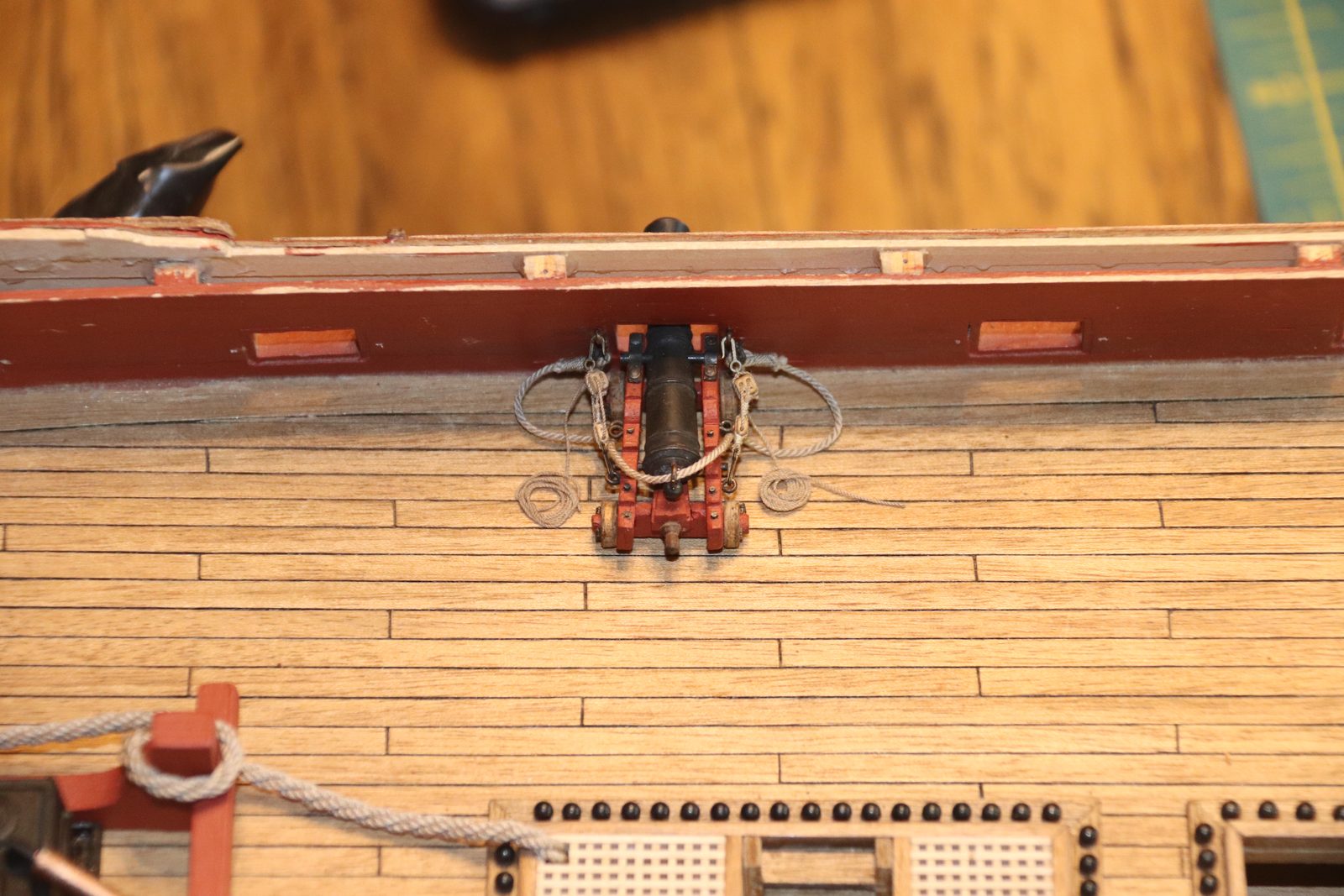
What you need
- tweezers
- hobby knife
- magnifier or good lamp
- blocks 2.3 mm (3/32 inch)
- tackle line 0.3 mm
- silk thread 0.1 mm
- small hooks (Futtock Strop hooks or photo-etched)
Dimensions
- silk thread 0.1 mm
- blocks 2.3 mm (3/32 inch)
- tackle line 0.3 mm
- Time
- an evening
- Difficulty
- hard
- When in the build
- Phase 8,
- From the log post
- Smaller hooks and a seizing of silk thread · forum
Before you start
The guns are on their carriages on deck and the breechings are in place. You have the double and single blocks to size (2.3 mm) and the smallest possible hooks to hand; the standard 5 mm hooks from the kit are out of proportion.
Lead the 0.3 mm tackle line through the double block and the single block and hook the tackle between the rings on the carriage and the bulwark. Simply knot the double block; that one sits at the carriage end and is less conspicuous.
tackle line 0.3 mm, blocks 2.3 mm
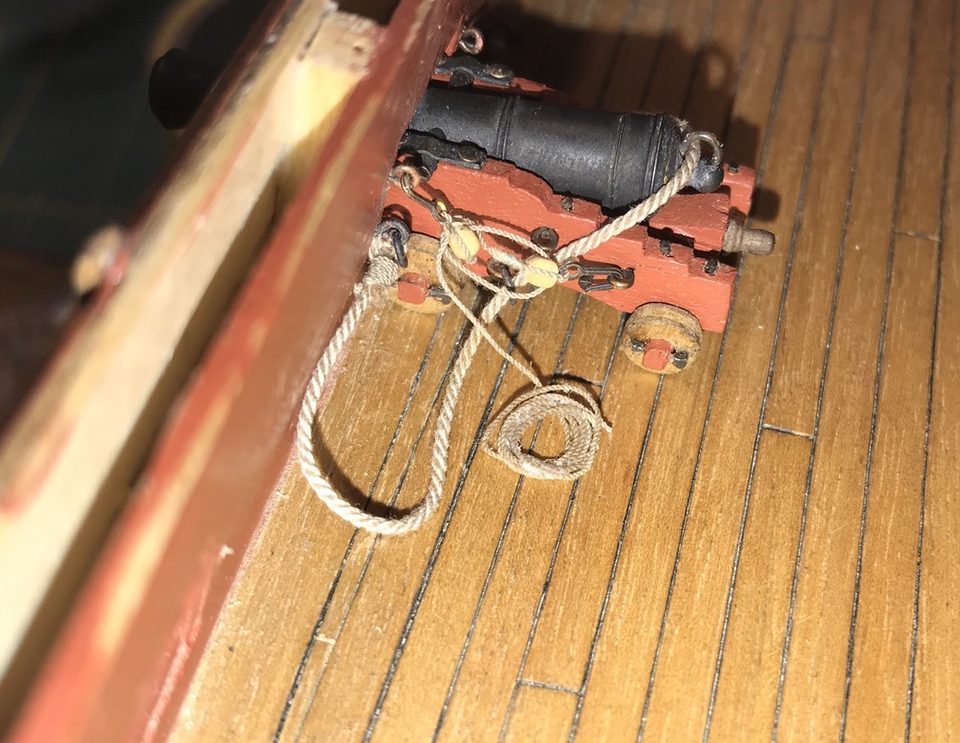
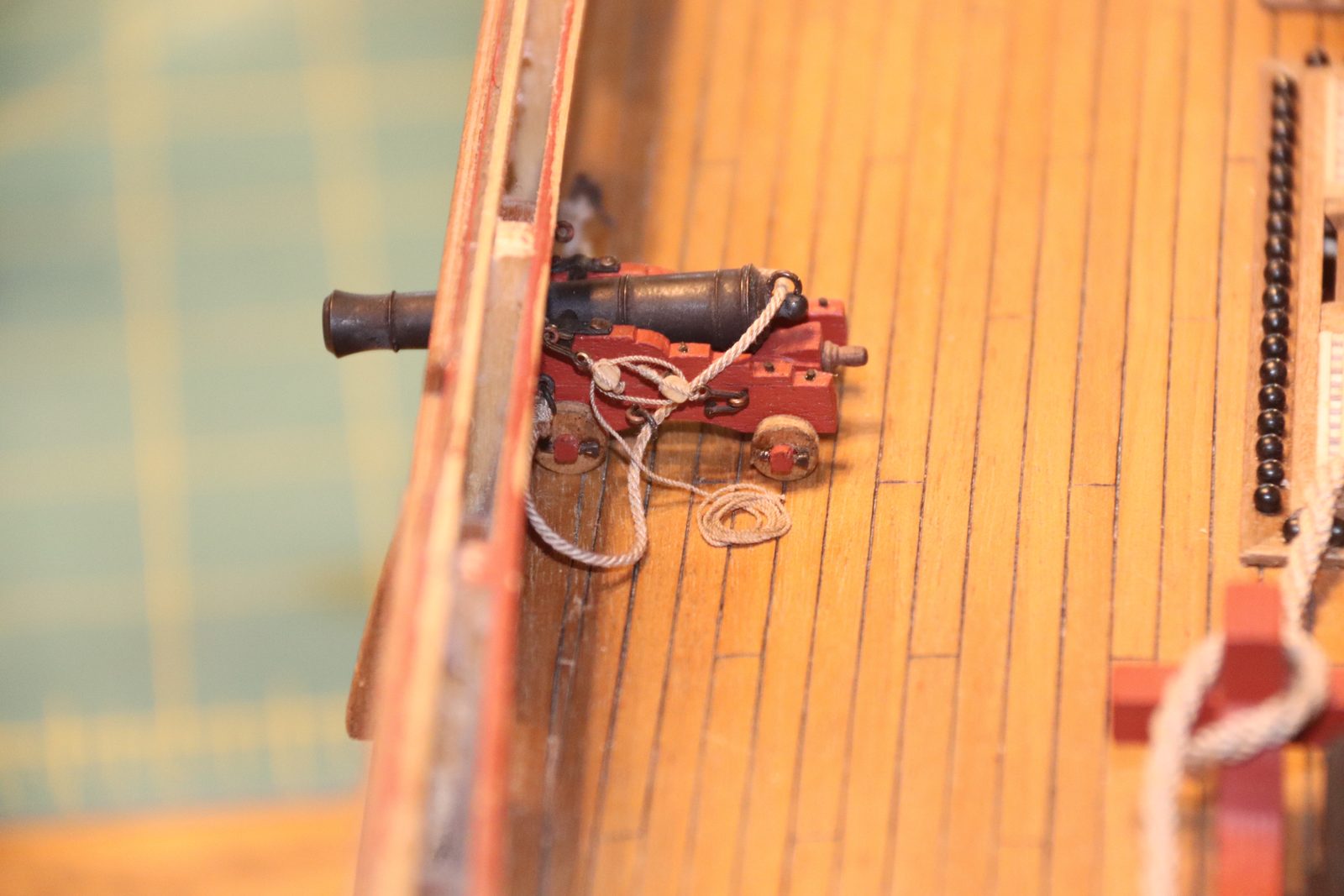
A gun tackle rove between carriage and bulwark; the line runs on to the coil on deck. Lay the line round the single, small block as a loop, but do not tie a knot. At this scale a glued knot is larger than the block itself, and it shows.
Watch out: Everything is terribly fiddly at this scale. Pingu57 drily remarked that even smaller hooks can no longer be picked up and blow away when you breathe out once.
Take 0.1 mm silk thread and wind it tightly a number of times round the two parts of the line just below the block. That secures the block without a knot. Finish the end of the silk thread and trim it short.
silk thread 0.1 mm
Tip from janzwart: For the seizing on the breeching, use the same method as in his cross-section of HMS Victory.
Hook the tackle into the ring with the small hook and lay the surplus tackle line coiled on the deck. How neat or untidy you make that is a matter of choice: a tight spiral looks too neat, a loose heap too messy.
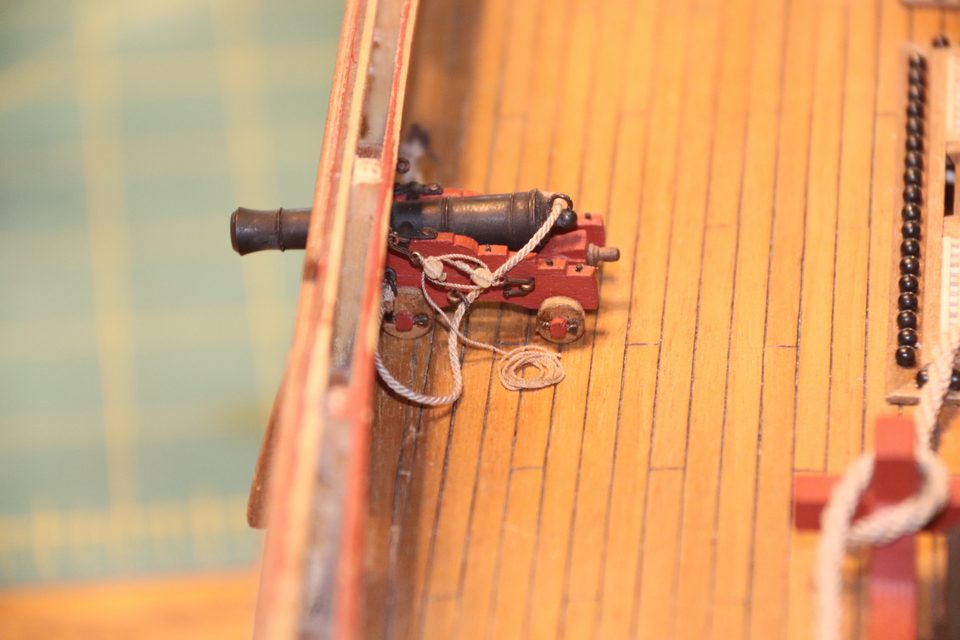
First trial with the smaller hooks and a rather more untidily laid rope. Watch out: The smaller hooks from Germany differ only very little from the previous ones. Every little helps, but do not expect miracles.
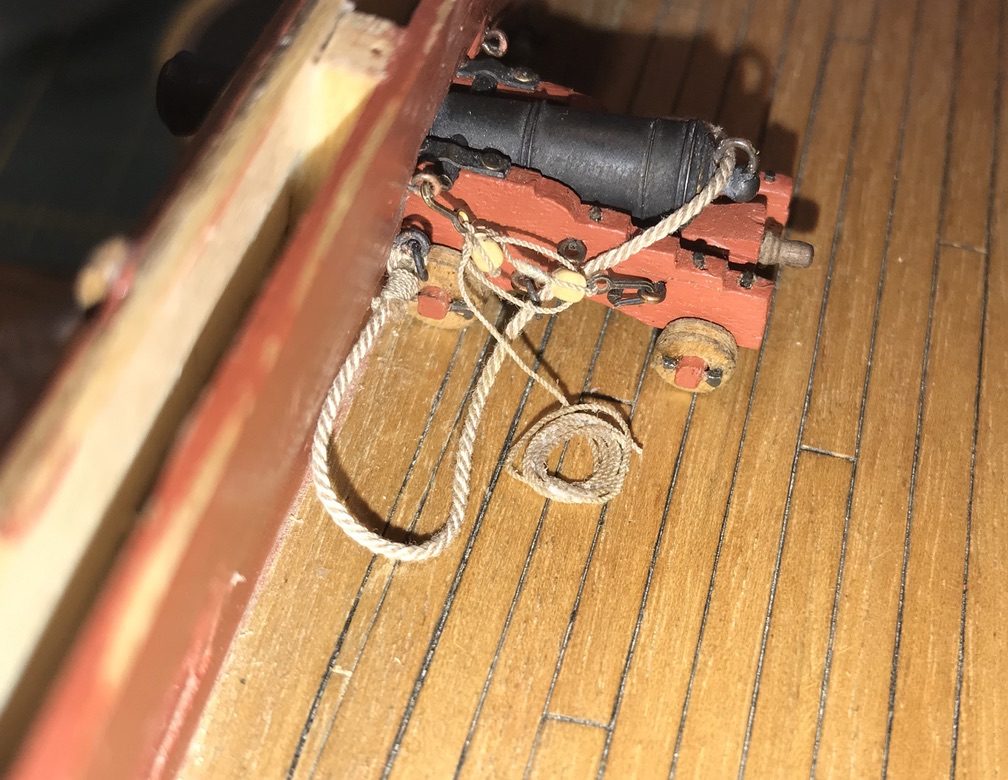
Result
The seizing works a treat and is just that bit nicer than a glued knot. I kept wrestling with the way of coiling the rope on deck for a while; that got a step-by-step guide of its own.
Problems met with this technique
The standard 5 mm Caldercraft hooks are completely out of proportion for the gun tackles. 20 sets of Futtock Strop hooks from Cornwall, later even smaller photo-etched hooks from Germany; all 'still a bit large'. (Tips from Pingu57, pietsan, Stephan Kertész, janzwart) to the register
Kit errata
Standard 5 mm hooks. Futtock Strop hooks from Cornwall and photo-etched hooks from Germany; still a bit large. to the register
In the same series: Ropework
- Securing a small block with a seizing of silk thread
- Laying a coiled tackle line on deck with the tweezers method
- A messenger with turned rollers, eye splices and a lanyard
All how-tos · Ropework and knots: breeching ropes, gun tackles and coiled falls