Painting with Admiralty paints in thin coats
Sand everything smooth, cover the deck and apply the red ochre in two or three thin coats, with a light sanding in between.
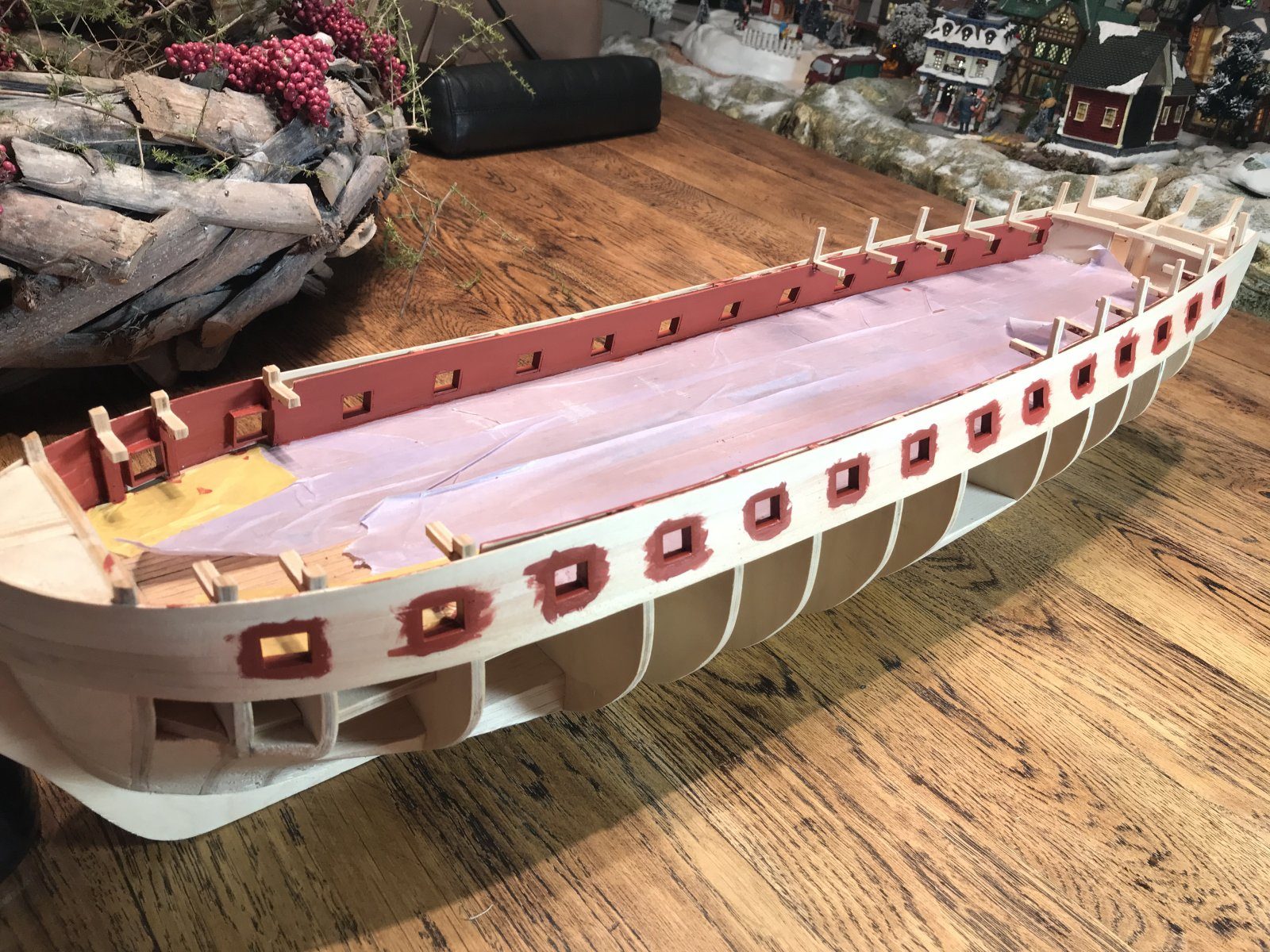
What you need
- sandpaper for the initial sanding
- 1000 or 1200 grit sandpaper (car supplies) or 3000 to 5000 grit (AliExpress)
- masking tape
- Admiralty paints red ochre
Dimensions
- 2 to 3 thin coats
- Time
- several evenings
- Difficulty
- moderate
- When in the build
- Phase 3,
- From the log post
- Linings in and the first coat of red ochre · forum
Before you start
All the port linings are in. The colours of the Diana are on the box and on the internet: almost all English warships have this red on the inner bulwark where guns are mounted.
Sand everything that will be painted as smooth as possible beforehand, so that later you need to go near the paint with sandpaper as little as possible. It looks a lot tidier straight away.
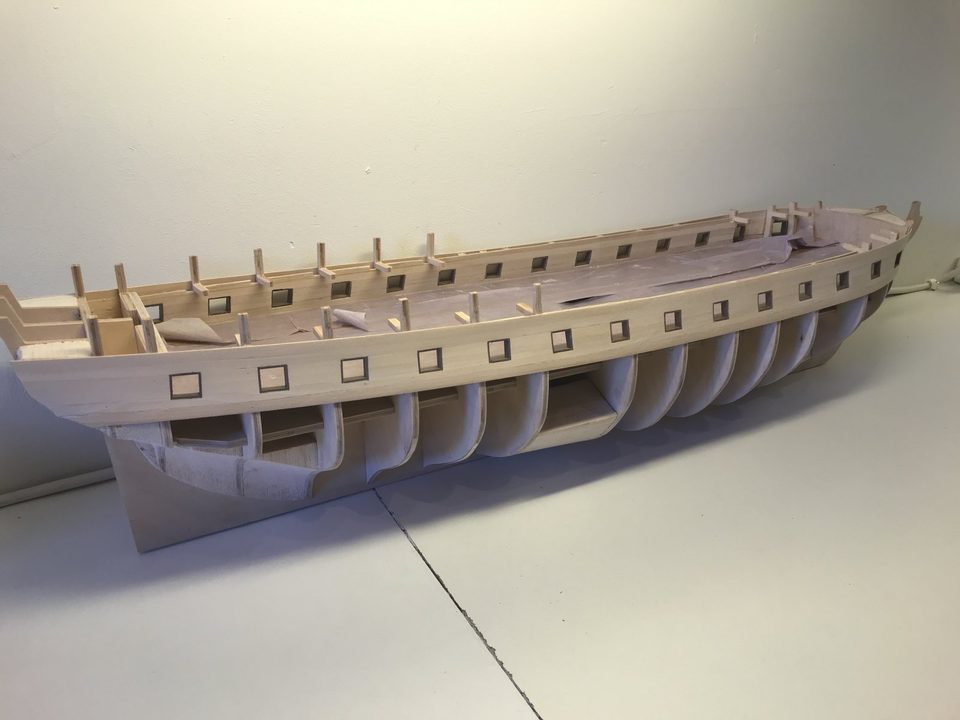
The linings and the inside sanded smooth, ready for paint. Cover the deck with masking tape and paper before you paint, so that no paint or sanding dust gets on the planking.
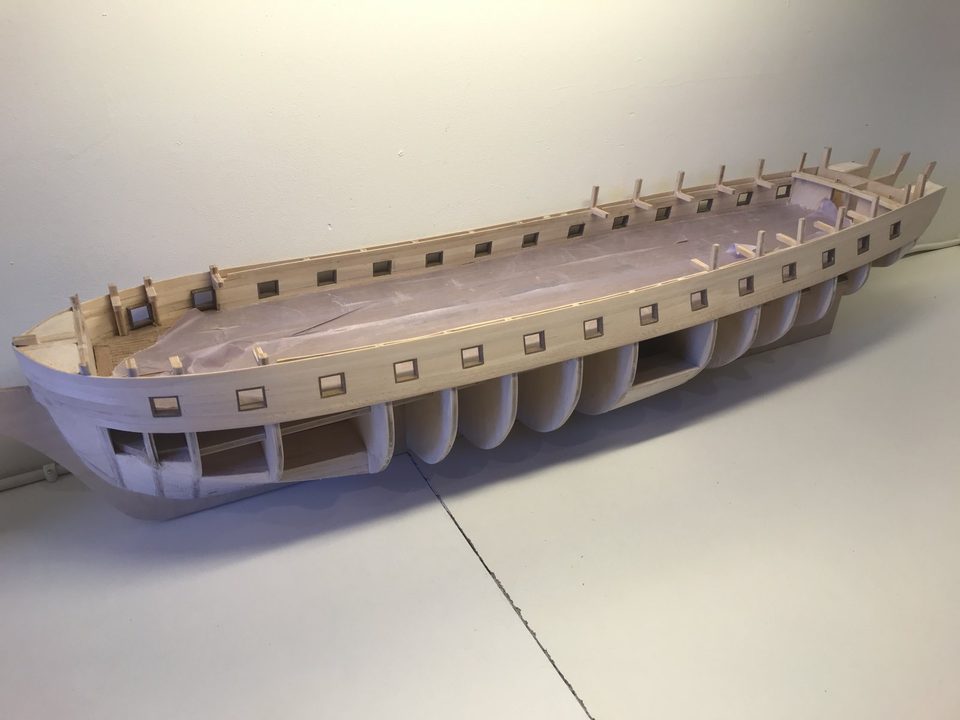
The deck covered with masking tape. Tip from Hans Groenenberg: Good idea to cover your deck.
Apply a first thin coat of red ochre and don't try to make that coat cover. Otherwise you paint too thick and the end result is less attractive. Let it dry; it won't cover by a long way, and that is as it should be.
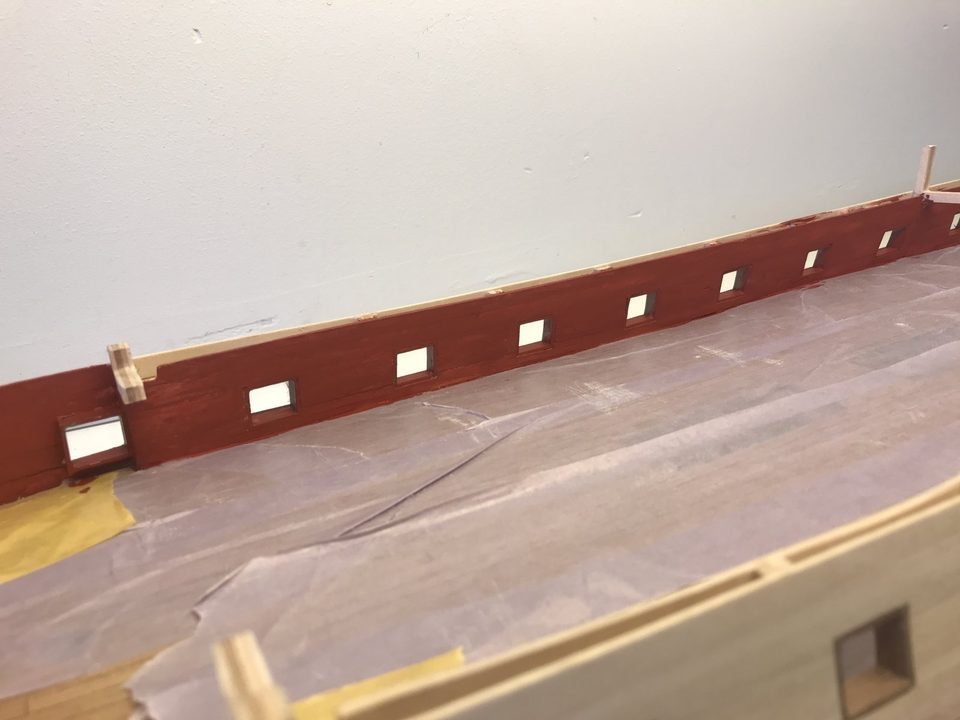
The first coat of red ochre: not yet covering. Tip from pietsan: You get the best result with Admiralty paints with two thin coats. Don't try to get the first coat to cover, because then you paint too thick. With Admiralty Paints you need no primer on wood; only the metal ornaments and mouldings get a thin coat of primer first. (modelbouwforum, 19 April 2016 and 15 December 2018)
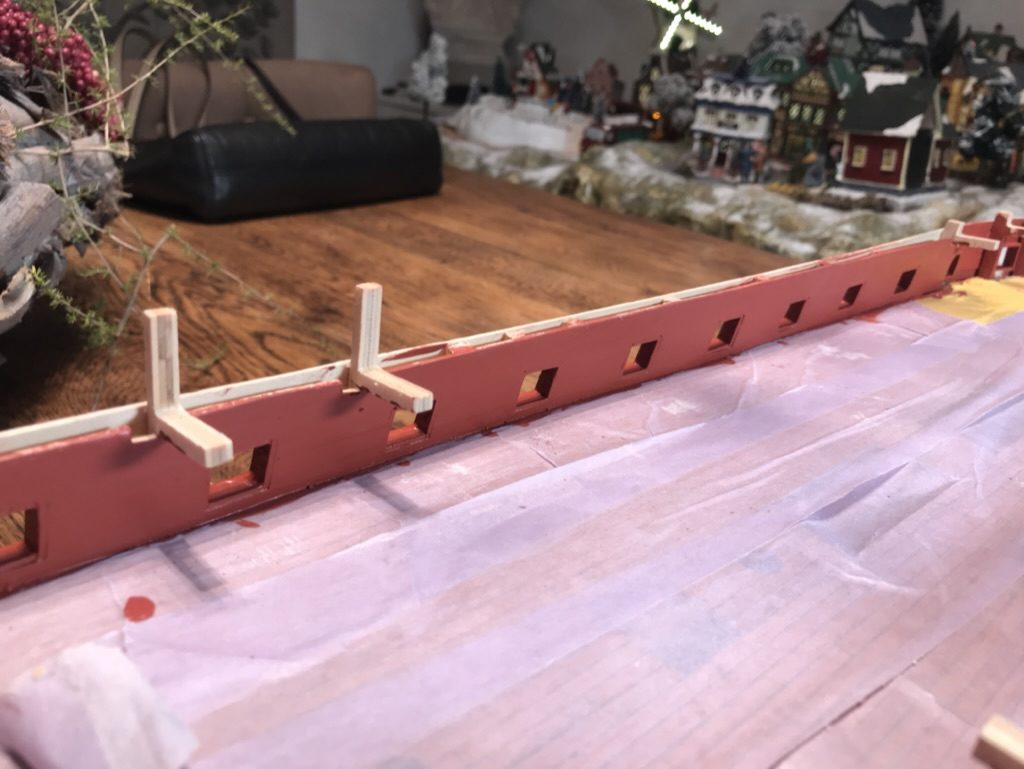
Watch out: In real life the red ochre looks browner than the red in photos of other models. Eduard is colour-blind and checked on the forum: it really is red. Better to check twice than paint four times.
After the first coat sand very lightly to remove the raised wood fibres, with 1000 or 1200 grit. Very fine sandpaper (3000 to 5000 grit) doesn't damage the paint and makes the surface mirror-smooth, although it won't remove grooves.
1000 to 1200 grit, or 3000 to 5000
Tip from paulbo: The thinner the paint, the more coats you need, but the smoother the result. After the first coat sand lightly with 1000 or 1200 to remove the raised wood fibres. I painted my gunports four or five times.
Watch out: Hans Groenenberg himself never sands finer than 400 grit and asked whether you notice any difference with 1000 to 4000. Eduard notices little difference, but the fine paper at least doesn't damage the paint.
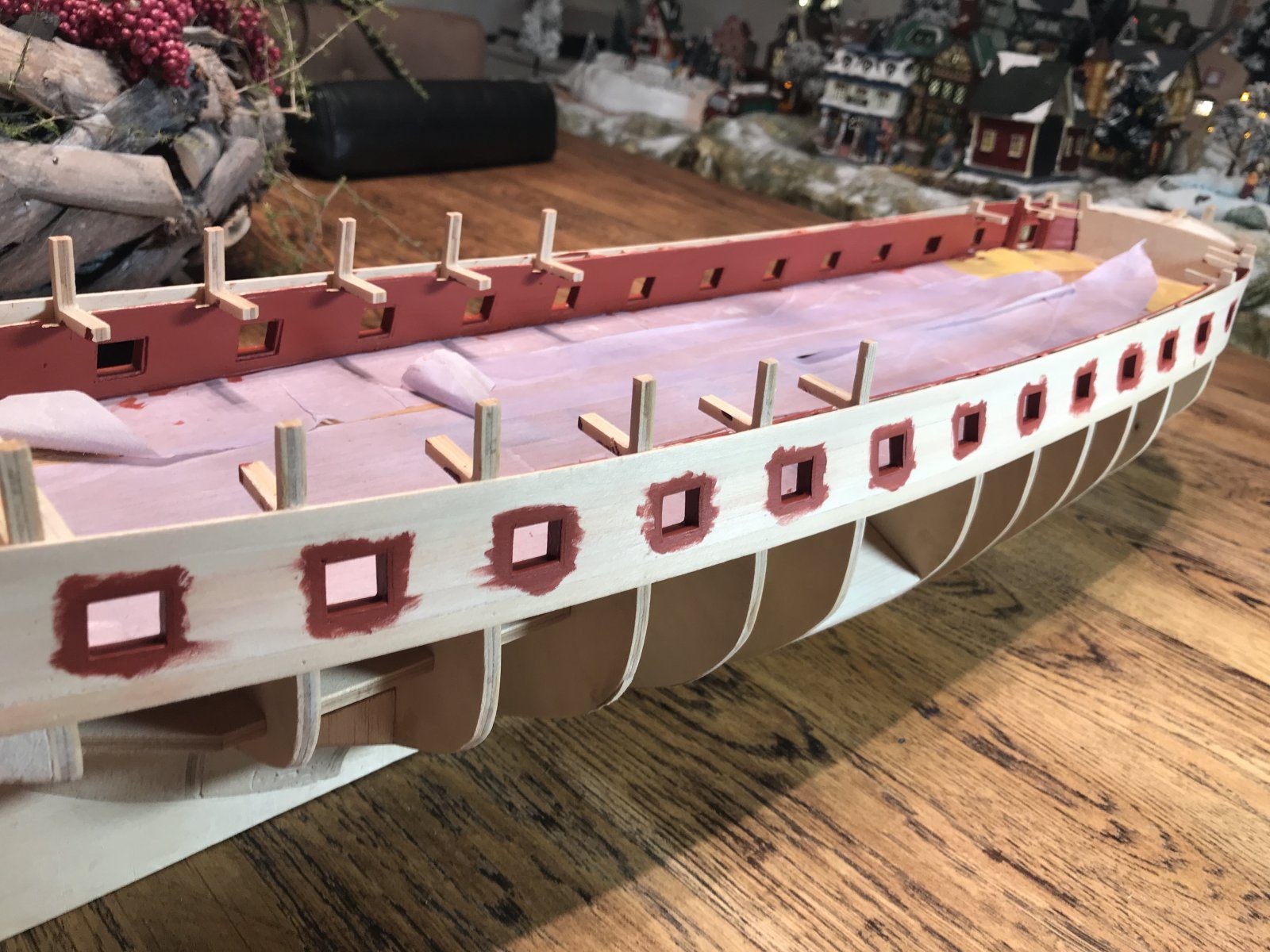
Apply a second thin coat and a third if needed. Each coat thinner than the last; practice makes perfect. Ours ended up with two coats on one side and three on the other.
2 to 3 coats
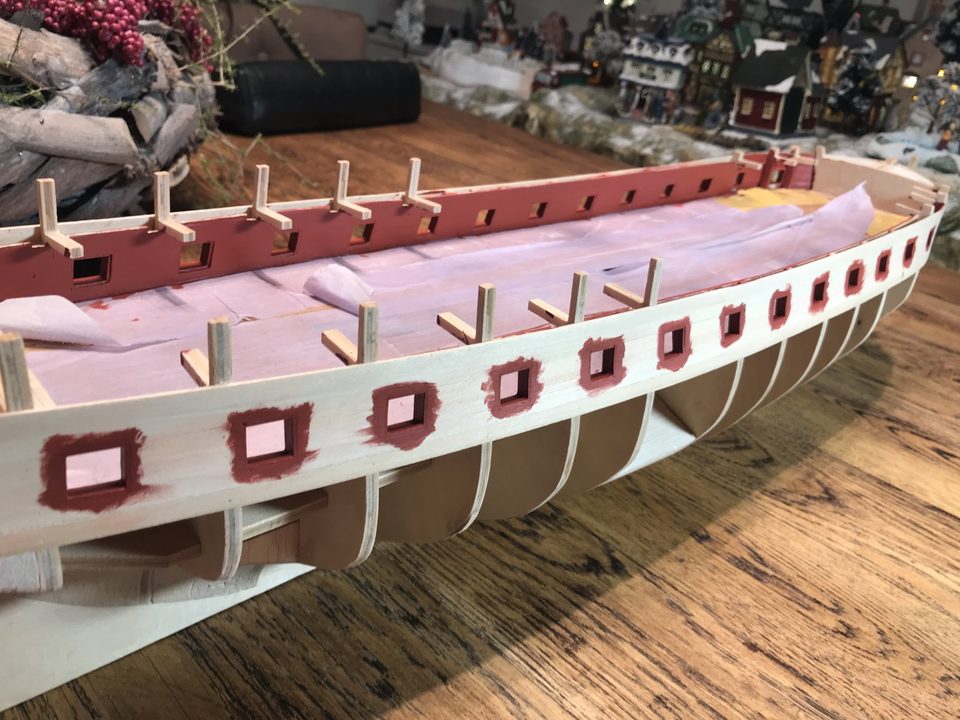
The port linings after the second and third coat. Tip from *Klaas* and pietsan: Thin to the consistency of milk, but check the label for what to thin with: Jotika's colour chart talks of white spirit, while *Klaas*, a3seidel and pietsan thin the pots from the kit range with water (Dutch forum, 'Bijboten Victory', November 2014). On wood Admiralty Paints need no primer underneath, on metal they do (pietsan, January 2014).
Watch out: Eduard couldn't yet get the paint on thin enough; painting is not his thing. Next time thinner still.
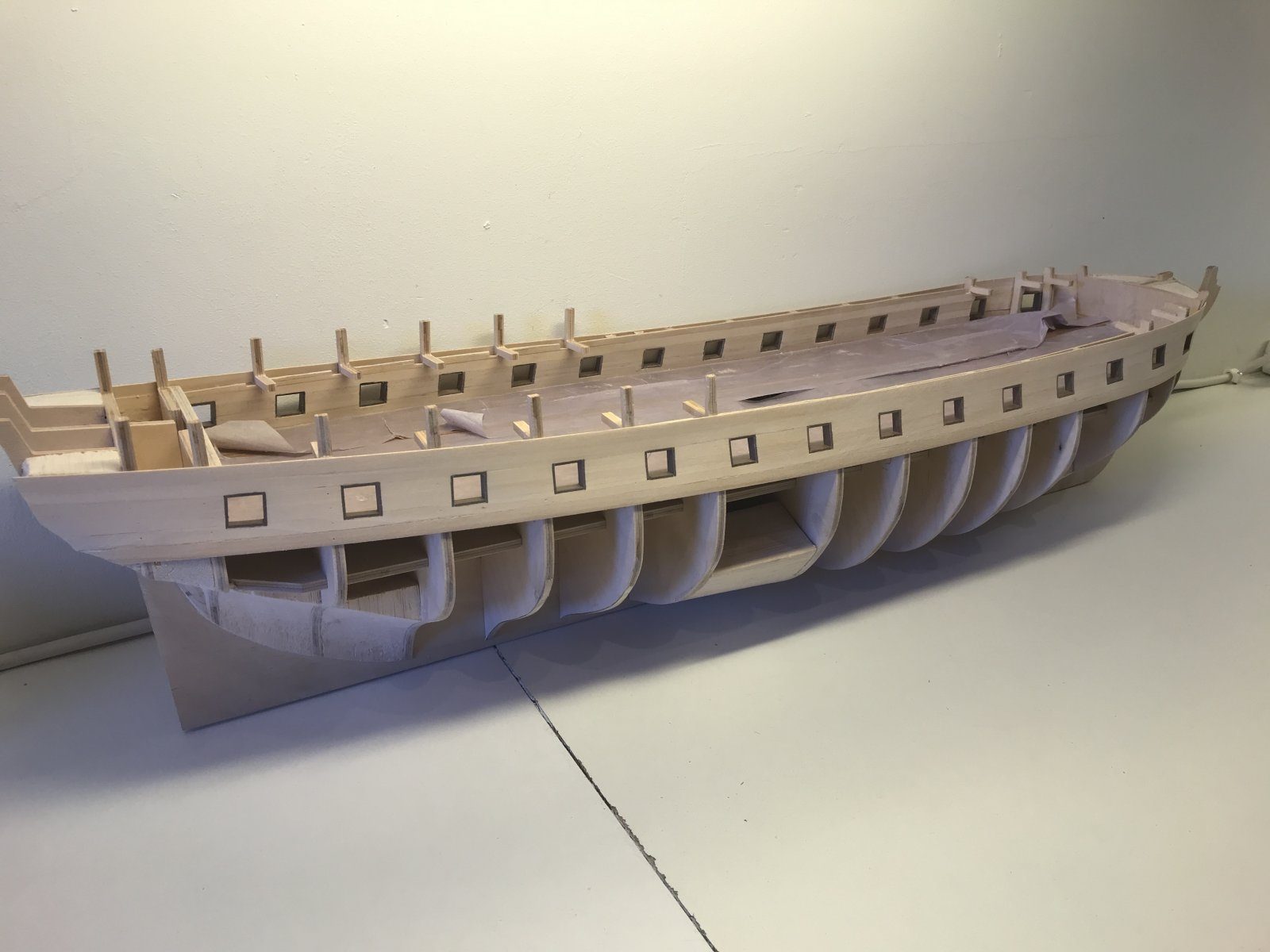
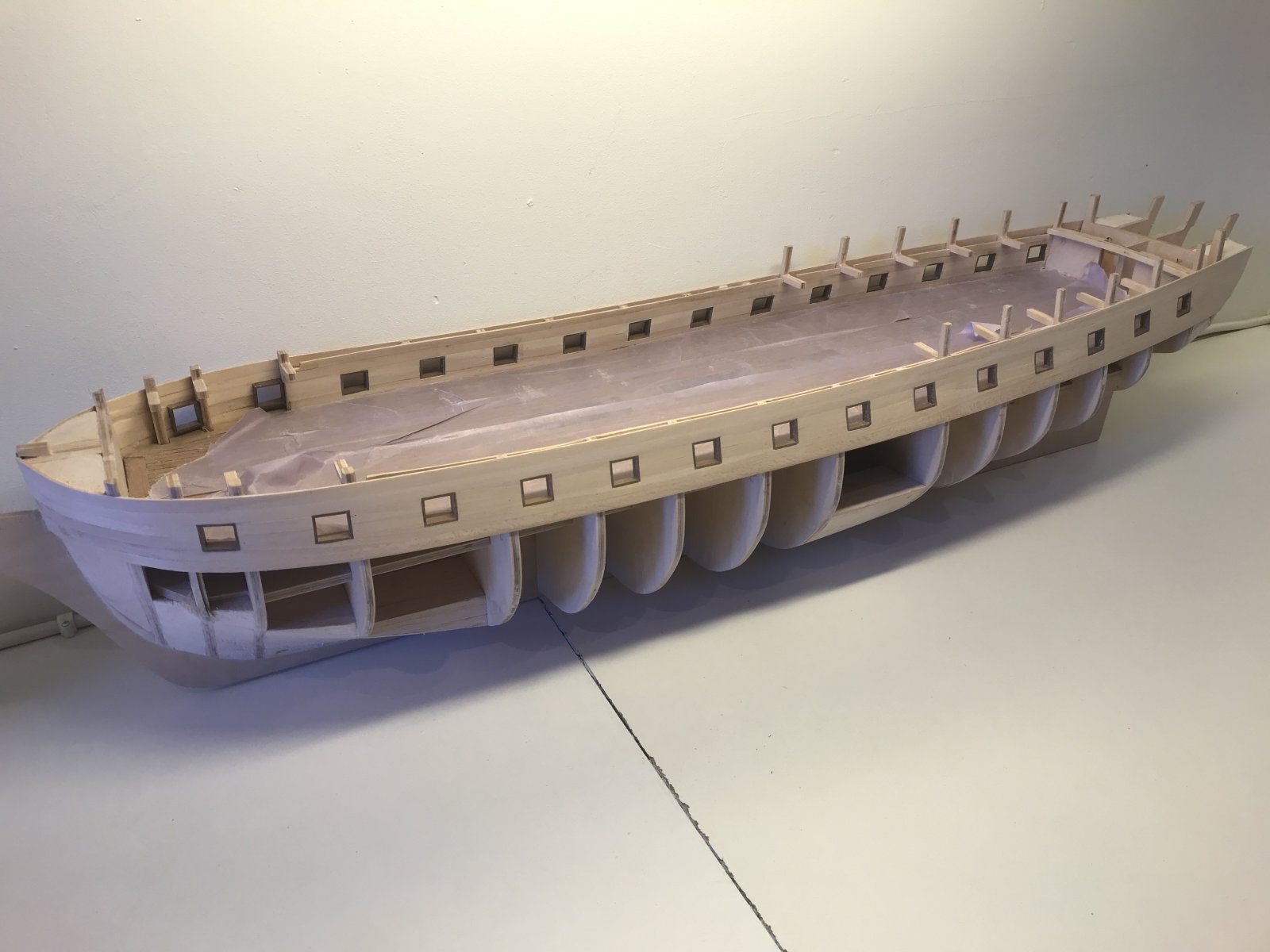
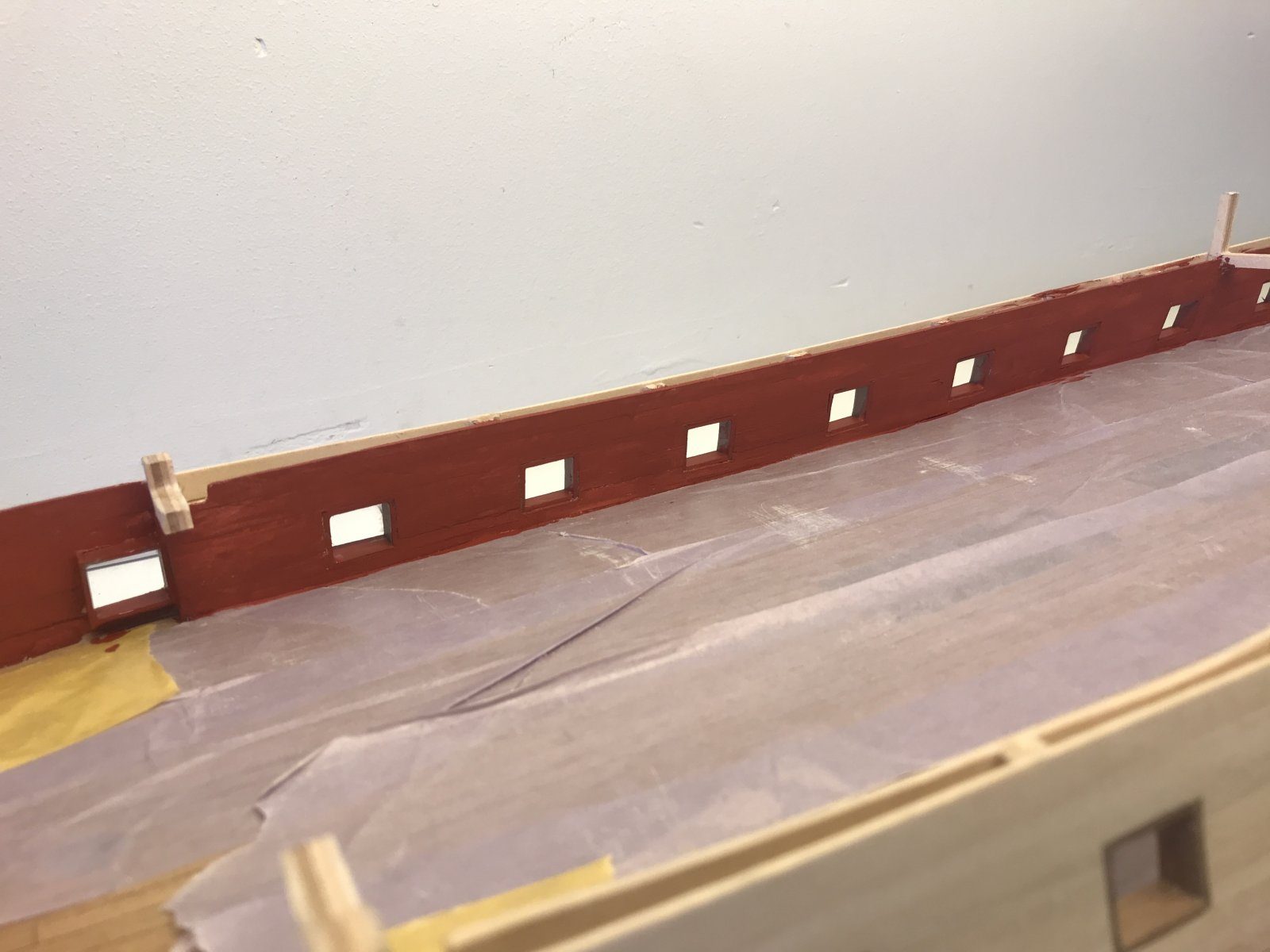
Result
After two to three thin coats the red ochre covers and the colour is indeed red. Next time we will paint even thinner and sand in between, as Paul recommends.
Problems met with this technique
The Admiralty red ochre looks much browner in reality than in photos of other models; Eduard is colour-blind. The colour is correct; apply two or more thin coats, the first coat does not cover. (Tips from pietsan, paulbo) to the register