Making washers and linchpins from brass pin heads
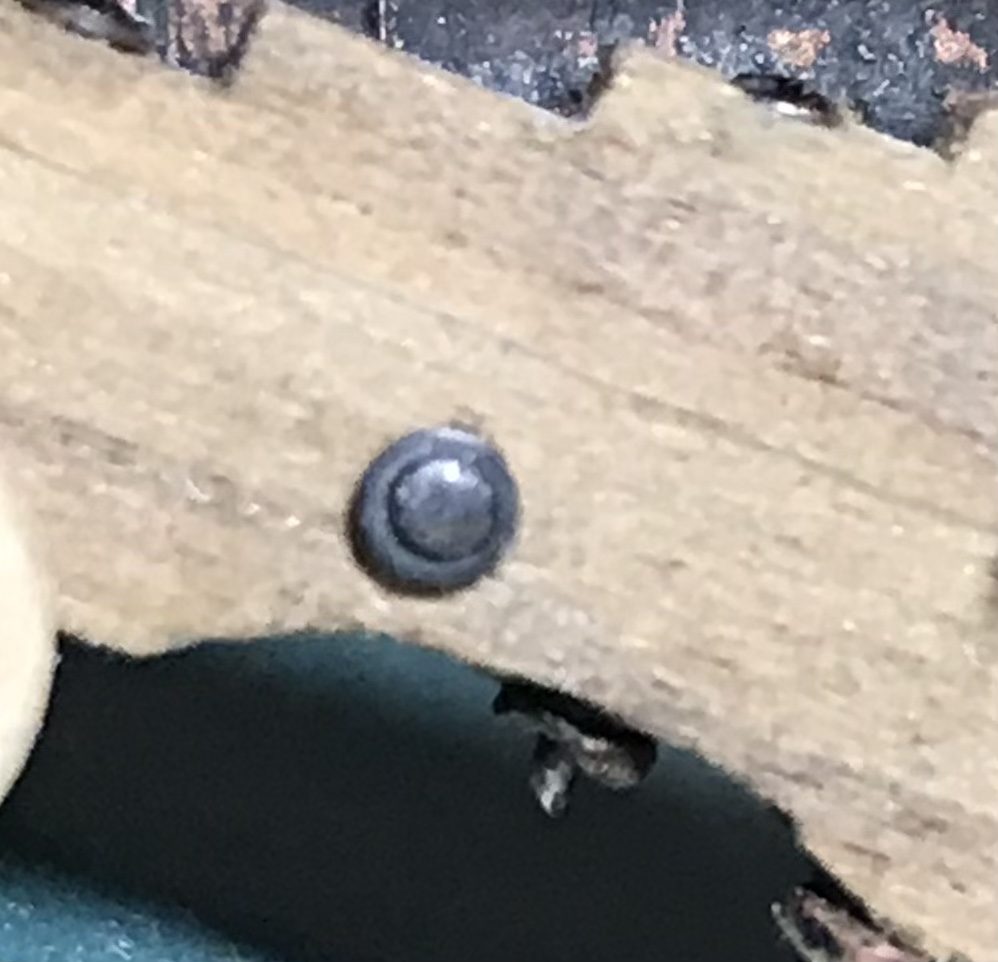
Imitate the washers behind the bolts of the gun carriages by filing the round head of a brass pin flat in the lathe, and make the linchpins from the same pins.
What you need
- lathe or Dremel with a small chuck
- flat needle file
- diamond file
- small hammer and anvil
- side cutters
- tweezers
- brass pins with round heads
- a tiny drop of glue
Dimensions
- cut the pin to the length of the bolt
- the pins themselves are slightly too thick for the linchpins; turn them a little thinner
- Time
- an hour
- Difficulty
- easy
- When in the build
- Phase 11,
- From the log post
- A day of tinkering and a brilliant idea · forum
Before you start
The gun carriages are assembled and the holes for the bolts are in the cheeks. Buy brass pins with a round head; the ordinary flat-headed pin assortment will not do, because it is precisely the round head that becomes the washer.
Clamp a round-headed brass pin in the lathe chuck with the head outwards. Let the head protrude a few millimetres so you can reach it with a file. Run the lathe at a gentle speed.
Hold a flat file against the turning head for a very short moment. The round head becomes flat at the front and a small flat disc appears: the washer. Look after every touch, because one second too long and the head is gone.
Watch out: File very briefly. The brass is soft and the head is small, so the washer gets too thin sooner than you think.
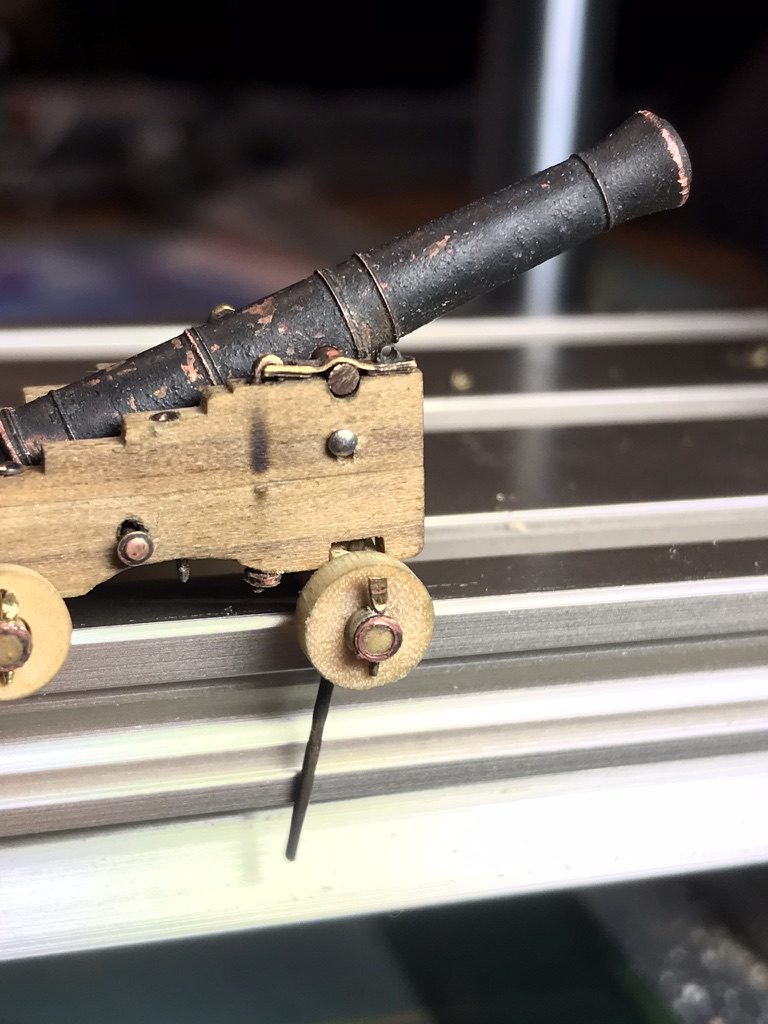
Cut the pin to the length of the bolt and push it into the hole in the cheek, with the flat head against the wood. The head now reads as a bolt with a washer. Fix it with a tiny drop of glue or secure it at the back with a small ring, as with the pins of the carriage.
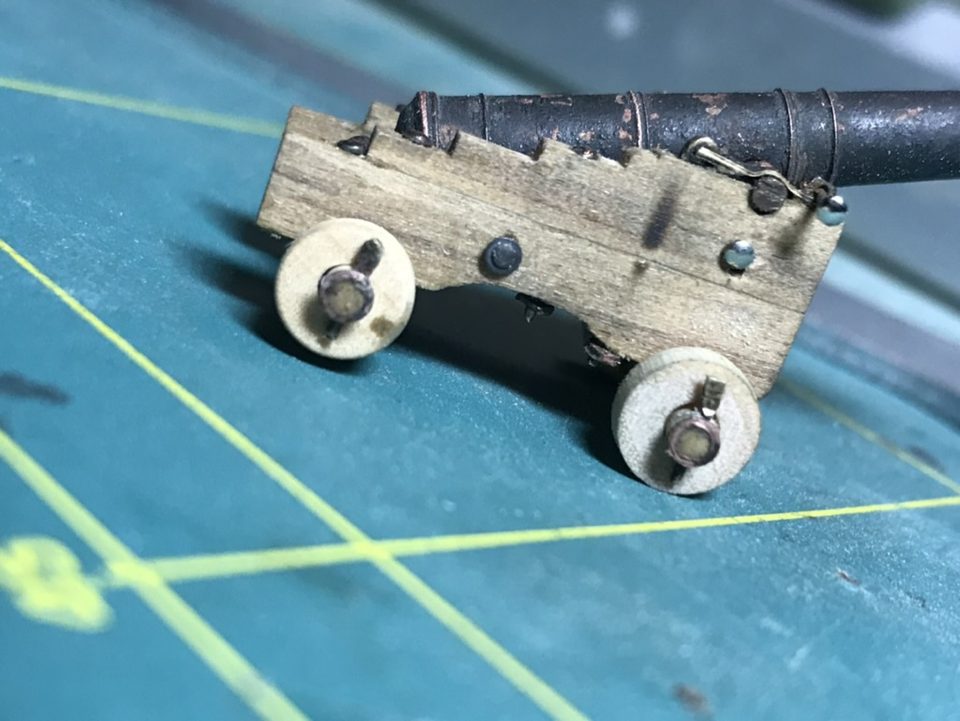
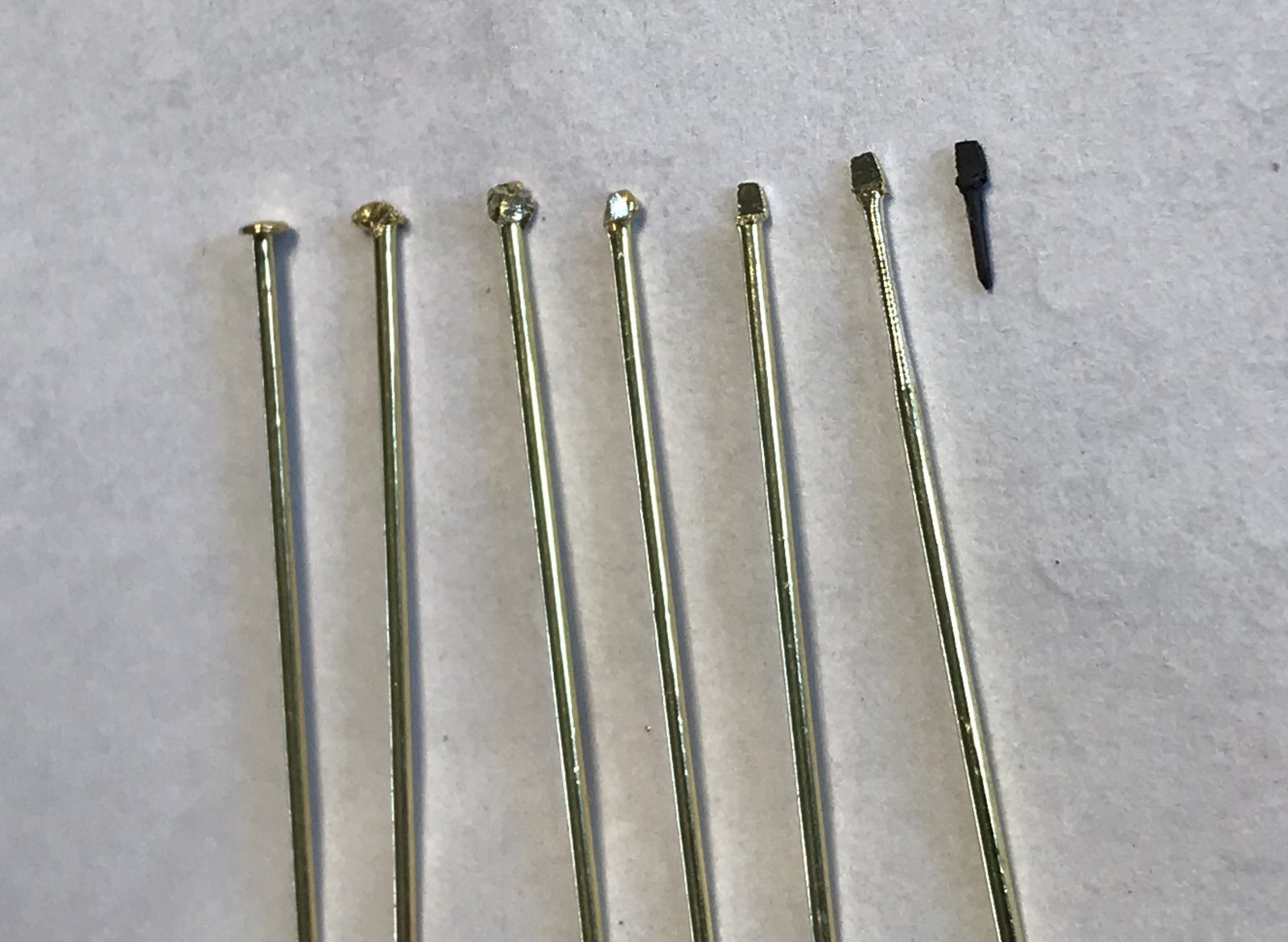
The carriage with the first pin heads as bolts in the cheek. For the pins that keep the trucks on the axletree, use the same pins. Flatten the head with a small hammer and then file it to the shape you want. Work in stages and lay the intermediate steps side by side, so that all the pins come out alike.
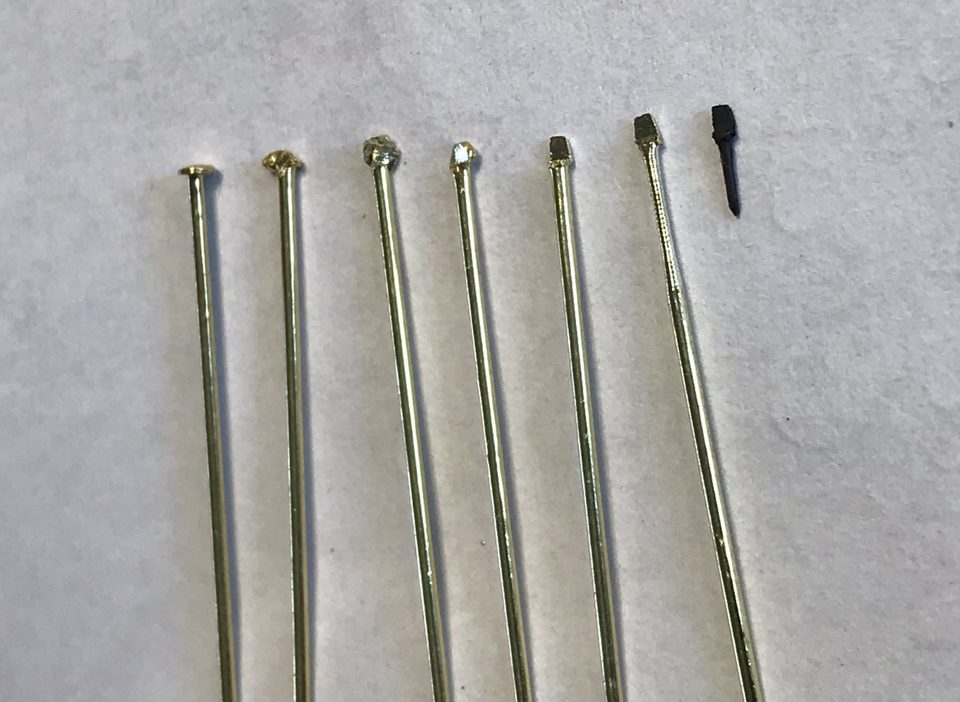
The stages of a linchpin: from round-headed pin via flattened head to the filed shape. The pins themselves are slightly too thick for a linchpin. Put the pin in a Dremel and hold a diamond file against it, so that the shank becomes a little thinner. Then cut it to length and push it through the hole in the axletree, with a tiny drop of glue.
Watch out: A tiny drop of glue is enough; more glue runs into the truck and then it no longer turns.
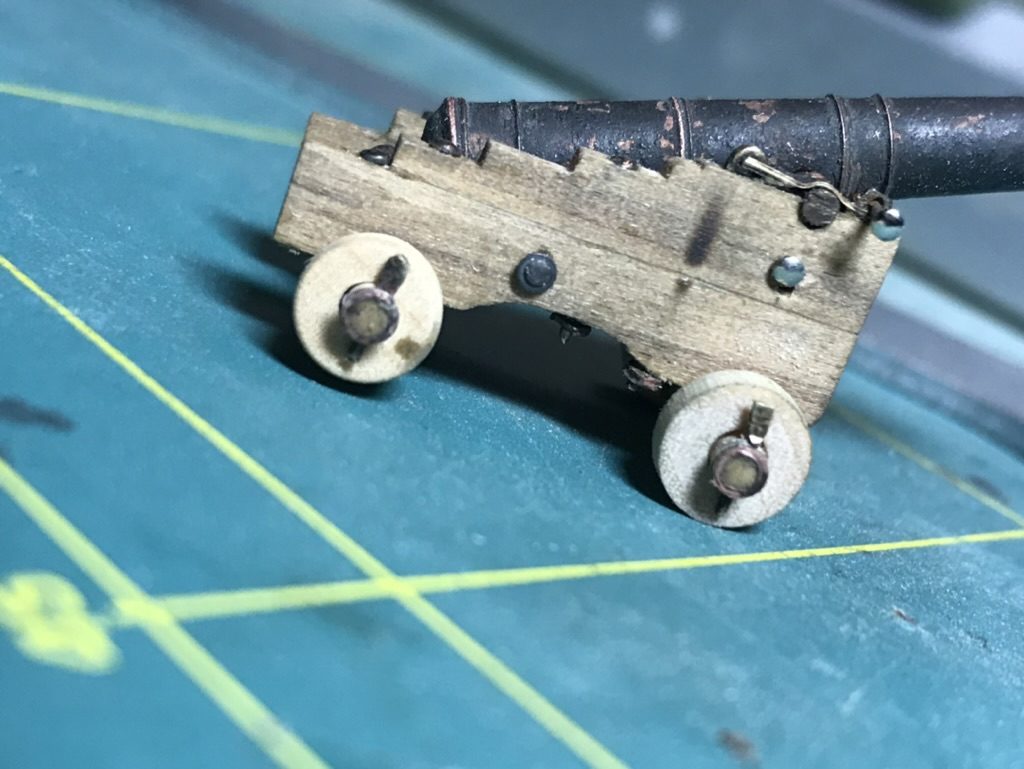
Result
The pin-head washer is a trick that takes a minute per bolt and gives exactly the look of a bolt with a washer. Stephan filed the trick away and Jaques thought it cleverly done; the same pins later became the linchpins too.
In the same series: Guns
- Lowering the gun in the port by setting the axletrees deeper
- Blackening brass gun barrels with blackening solution
- Detailing a kit gun carriage with bolts, linchpins, quoin handle and breeching ring
- Turning the quoin handle from a satay skewer
- Milling gun carriages for the 9-pounders on the cross-slide table
- Making washers and linchpins from brass pin heads
- Carronades: trucks from brass tube and a working elevating screw