A messenger with turned rollers, eye splices and a lanyard
Lay a messenger on the gun deck that brings the anchor cable to the capstan: turn rollers from offcuts, make an eye splice at both ends and join the eyes with a lanyard.
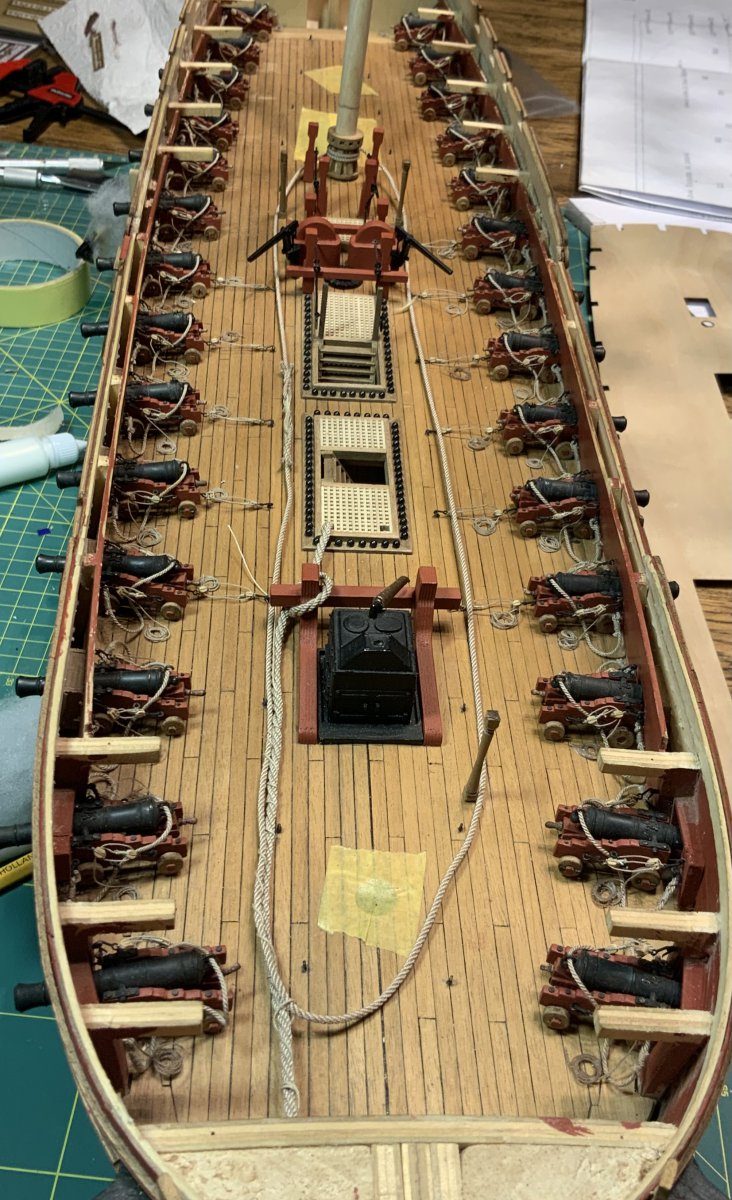
What you need
- lathe
- awl or needle for splicing
- hobby knife
- walnut offcuts (from between laser-cut parts)
- messenger 1.6 mm left-hand laid
- anchor cable 2.6 mm left-hand laid
- thin line for whipping and lanyard
Dimensions
- messenger 1.6 mm left-hand laid
- anchor cable 2.6 mm left-hand laid
- rollers exactly the height of the gun deck
- Time
- a day
- Difficulty
- hard
- When in the build
- Phase 8,
- From the log post
- Pumps capstan and a messenger with three rollers · forum
Before you start
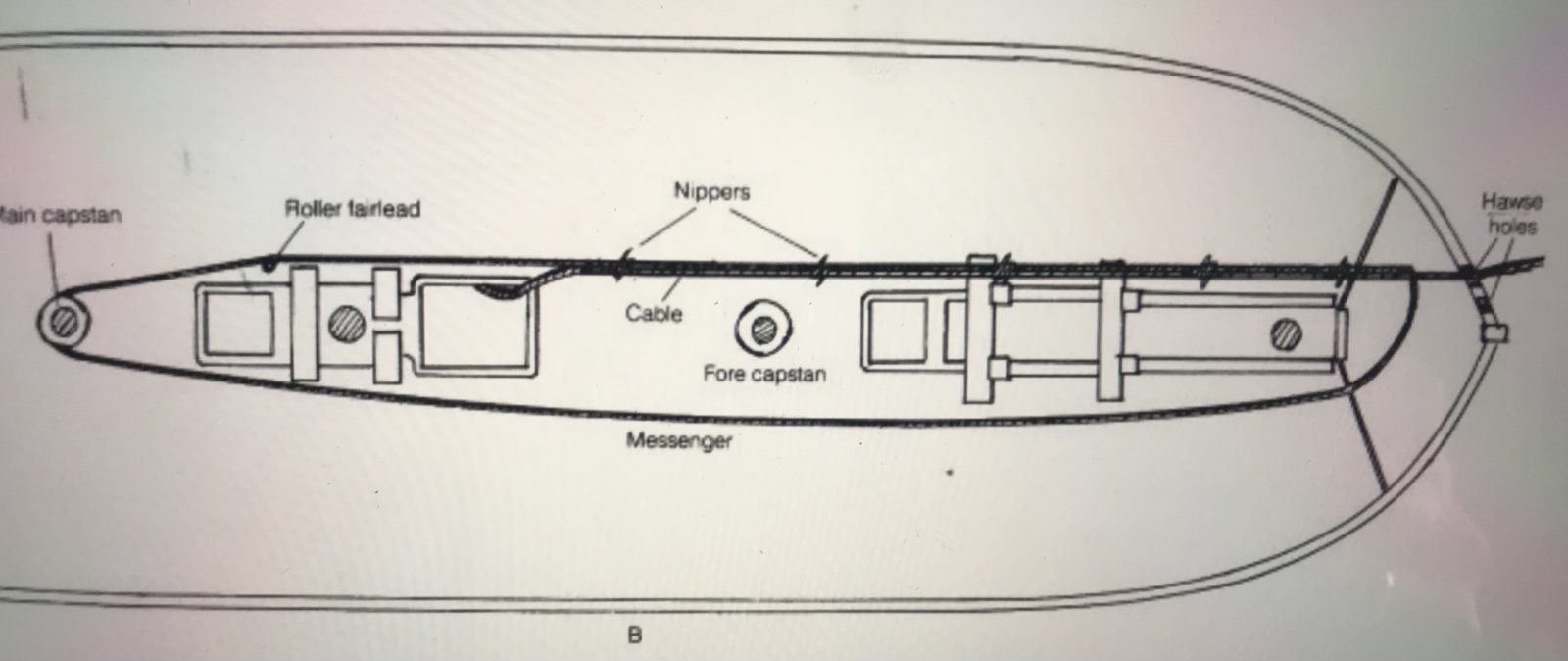
The pump assembly and the capstan are in place on the gun deck. First find a drawing of the layout of messenger and rollers, for instance in The Anatomy of the Ship, so you know where the rollers go and where the anchor cable comes up.
Draw or look up the run of the messenger on the gun deck: from the capstan forward, round the rollers in the corners, and back. At the fore end, where the anchor cable is hauled up, there is no roller. So you need three, not four.
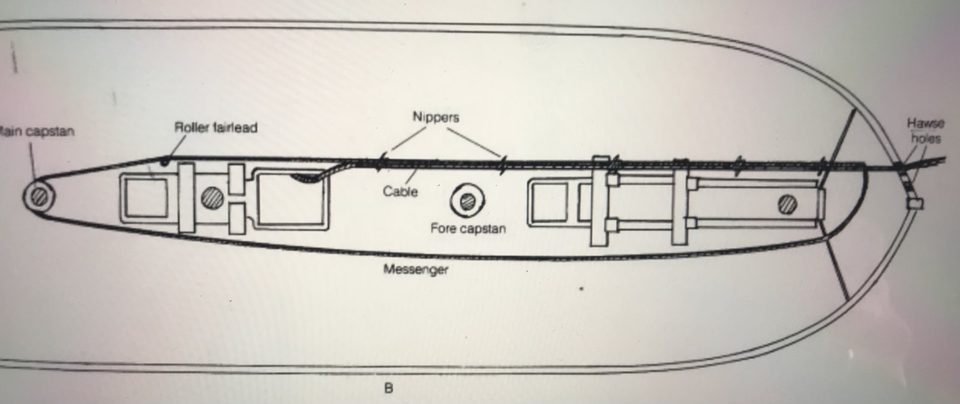
Drawing of the layout: the messenger runs in a loop over the deck, with rollers in the corners and the anchor cable coming up forward. Tip from pietsan: The messenger is for hauling in the anchor cable, not the rudder. That was a slip of the pen in the post, but a funny one.
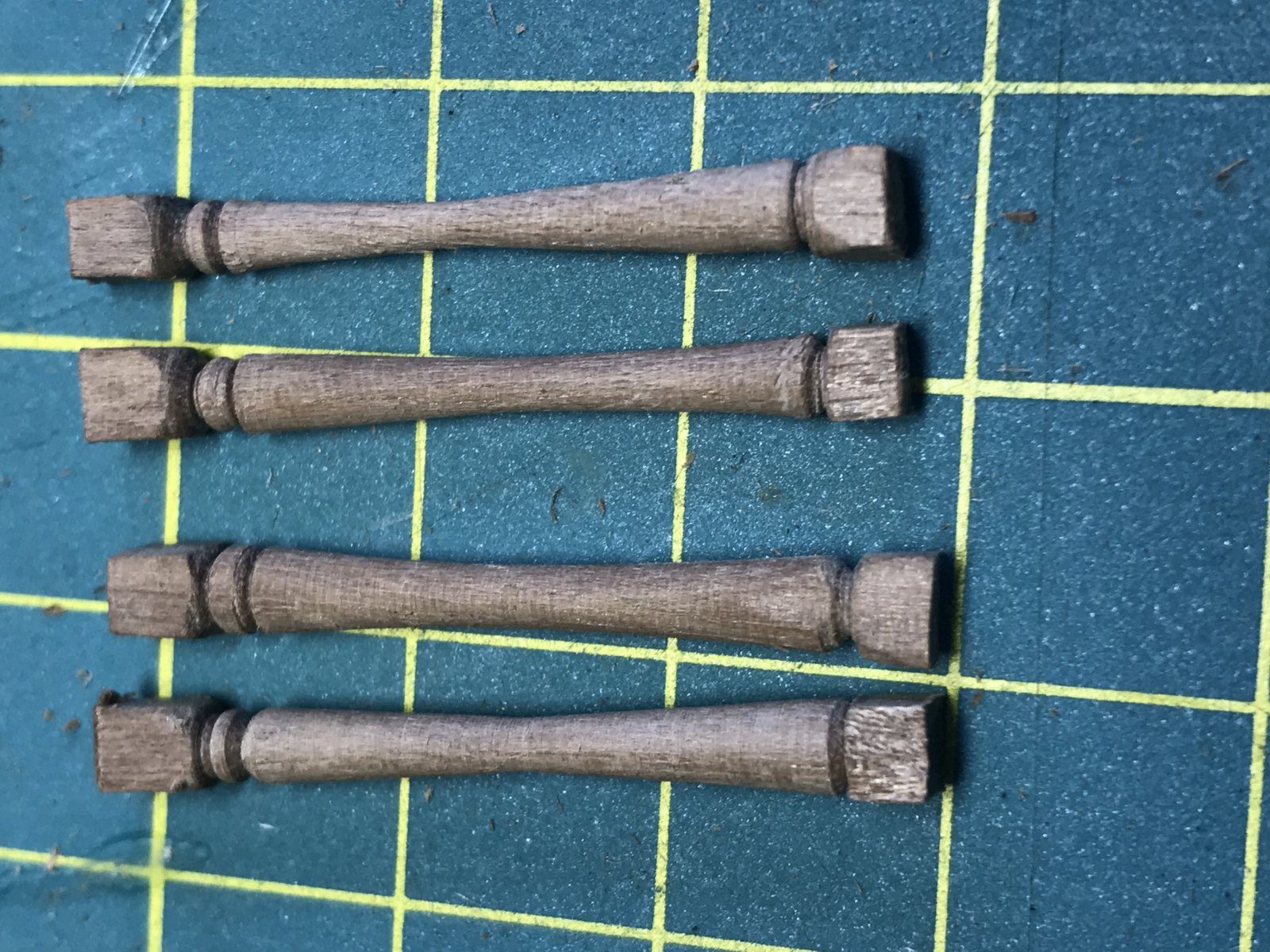
Turn the rollers on the lathe from walnut offcuts left between the laser-cut parts. Make them exactly the height of the gun deck, so you can fix them to the pillars of the upper deck. They stand in the corners, out of sight, so small differences between the rollers will not show later.
height equal to the gun deck
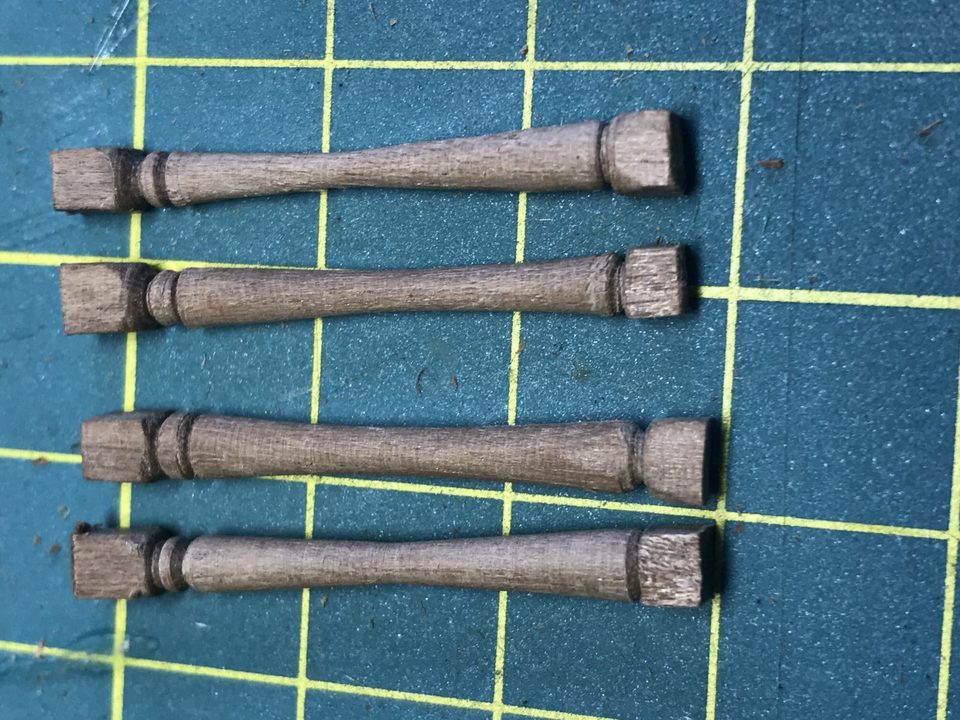
Four turned walnut rollers: a thick barrel with a narrower neck at each end. Watch out: Turning is fun, but getting everything exactly the same is hard. Consolation: in the corners of the gun deck nobody will see it.
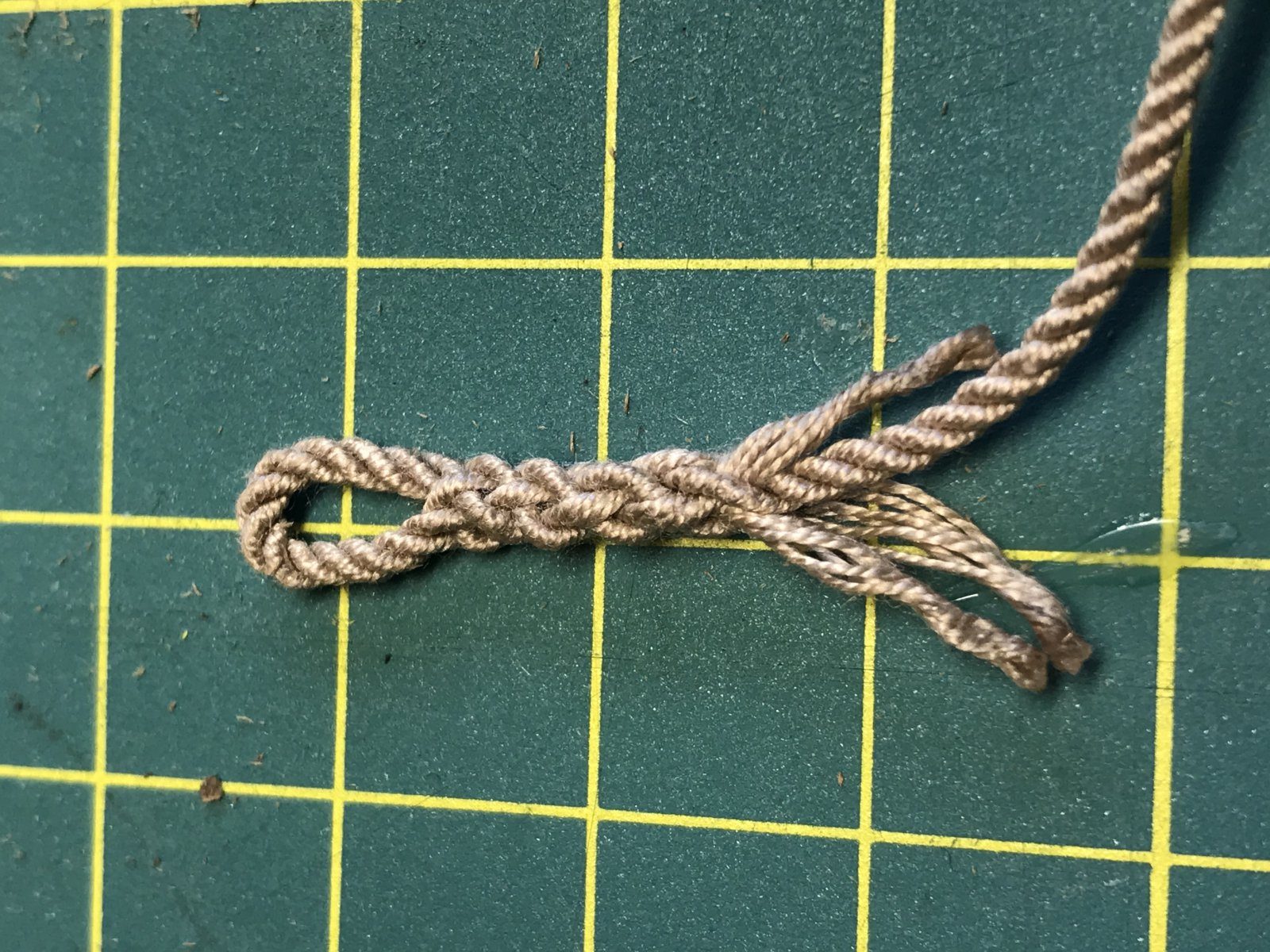
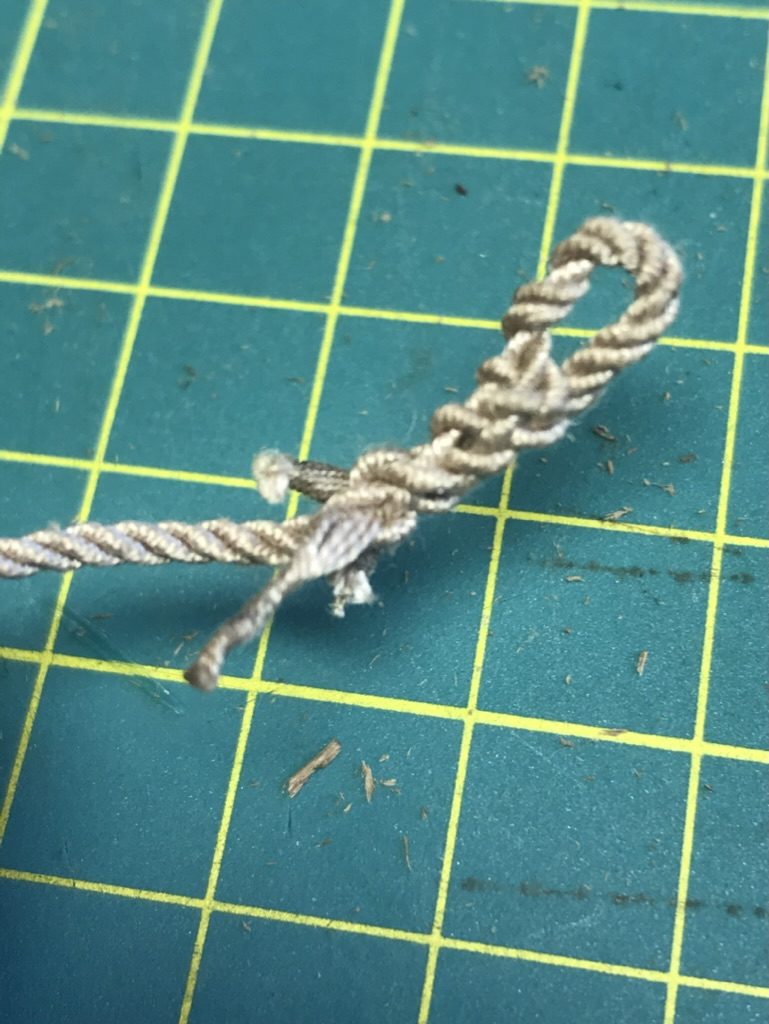
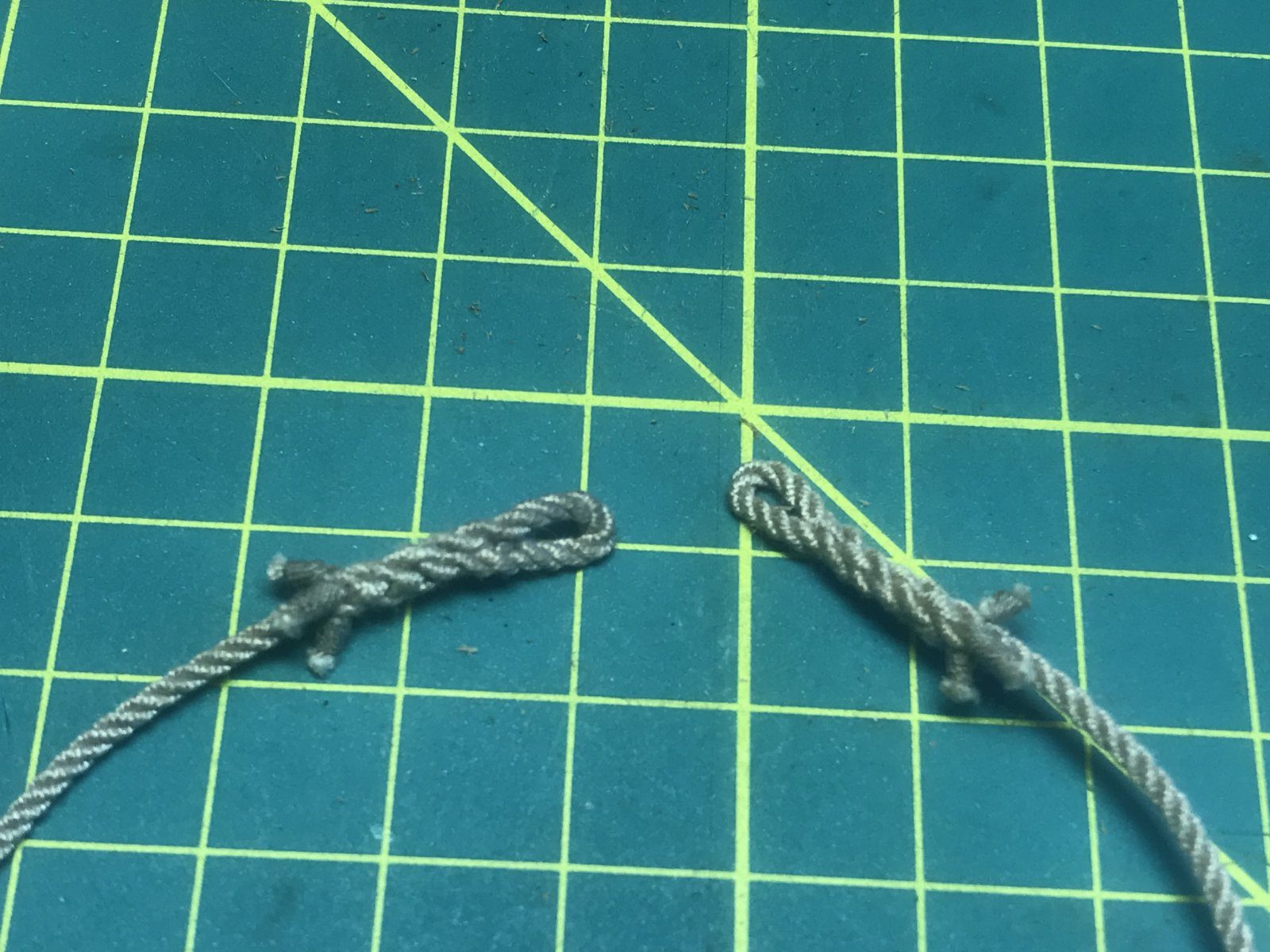
Splice an eye into each end of the 1.6 mm messenger: unlay the strands, tuck them alternately under the strands of the standing part and pull tight. Bind off the loose ends with a small whipping. The second splice already goes better than the first, and it is certainly strong.
messenger 1.6 mm left-hand laid
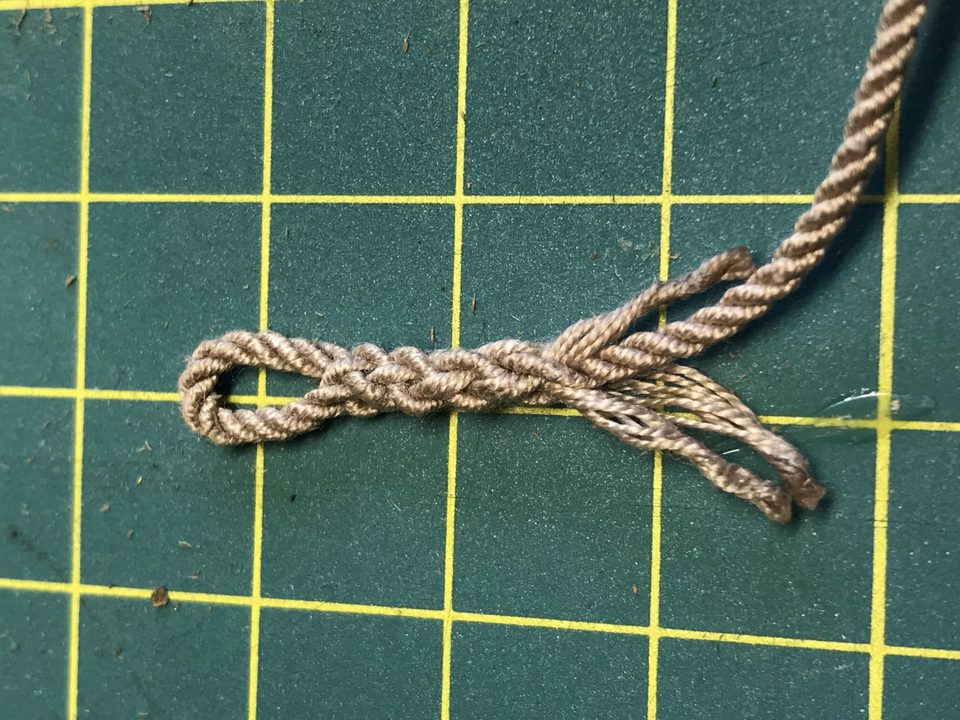
The first eye splice: the eye is formed, the strands are not yet finished off. 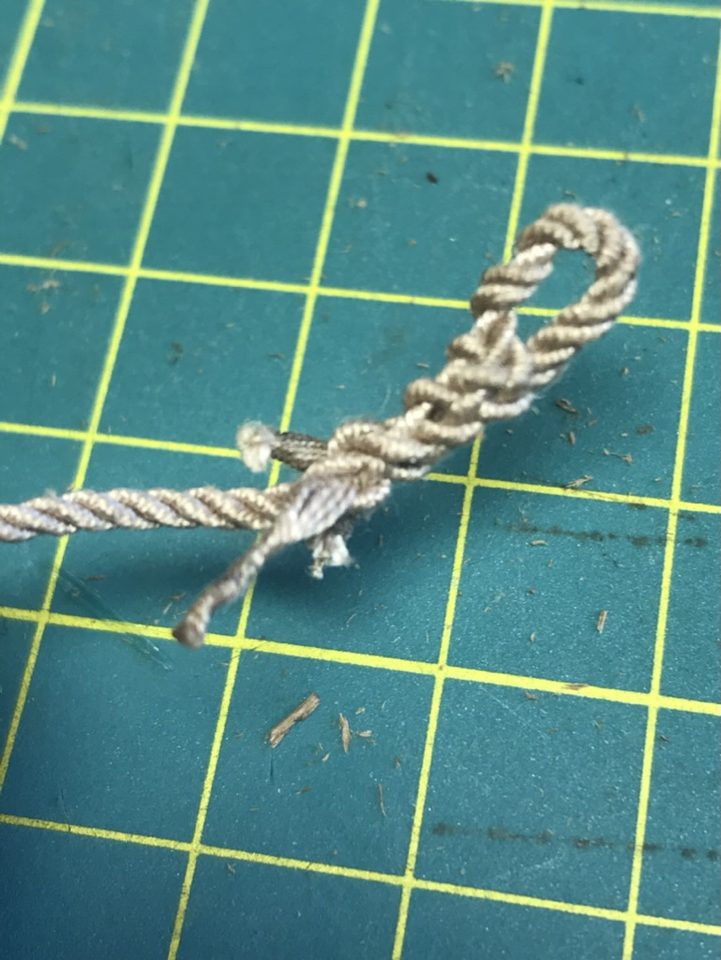
A finished splice with the whipping round the ends. Tip from Herby63: In thin rope you do not splice, you imitate it: double the rope, push a needle through both parts just below the bight, pass the short end through the eye of the needle and pull it through the bight, tighten, a drop of CA, cut short (Dutch forum, 'Vaardigheden, tips en weetjes', October 2021). Stephan Kertész still managed a real eye splice in 0.3 mm thread.
Watch out: The first splice comes out untidy. Expect to make it again; the second one is already neater.
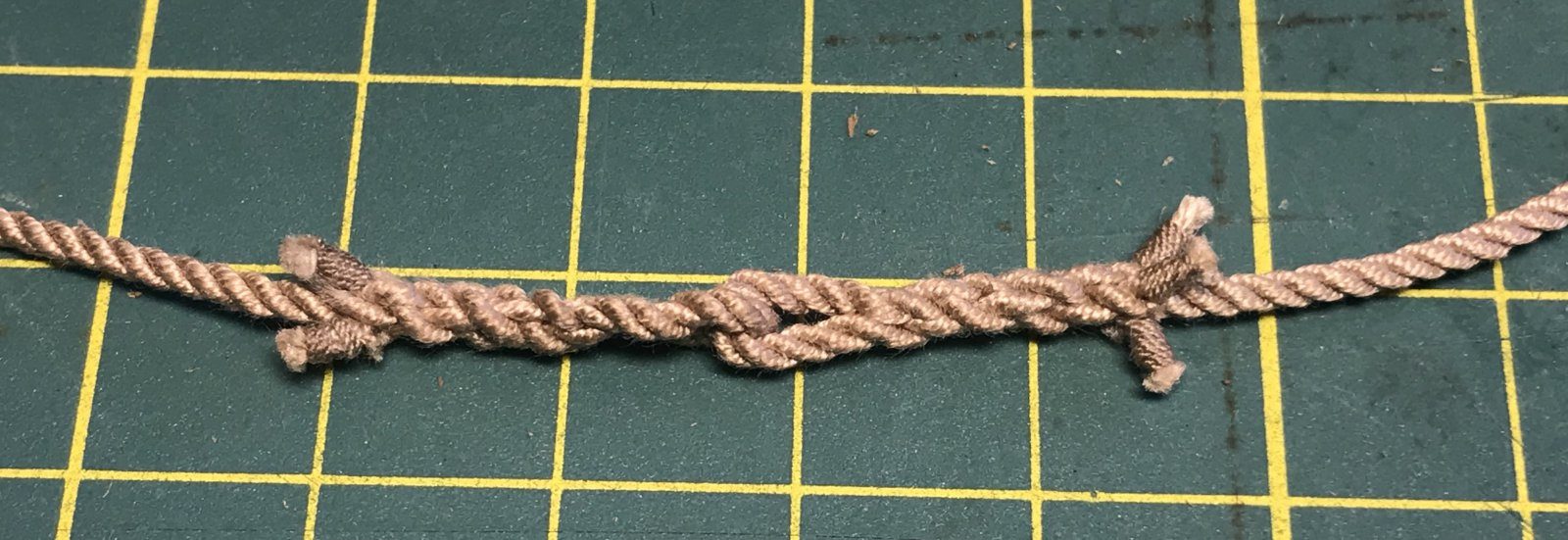
It is tempting to pass the second eye through the first before closing it, and that is what I did at first. Then they are fixed, but they can never be undone again and the length is fixed. Keep both eyes separate.
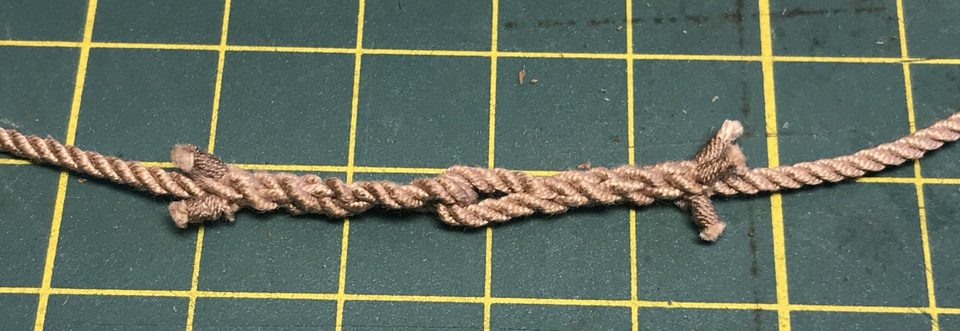
Not like this: both eye splices passed through each other, so the messenger can never be undone. Tip from pietsan: You must make an eye at both ends; in use these were joined with a lanyard. The eyes must be able to come apart again.
Watch out: This is shown, of all places, on the drawing on page 36 of my own build log. So look carefully at your own sources before you start splicing.
Fasten a thin line to one eye with two half hitches. Then pass it alternately through both eyes a number of times, so the eyes are drawn towards each other. Finish off with two half hitches round the lanyard itself.
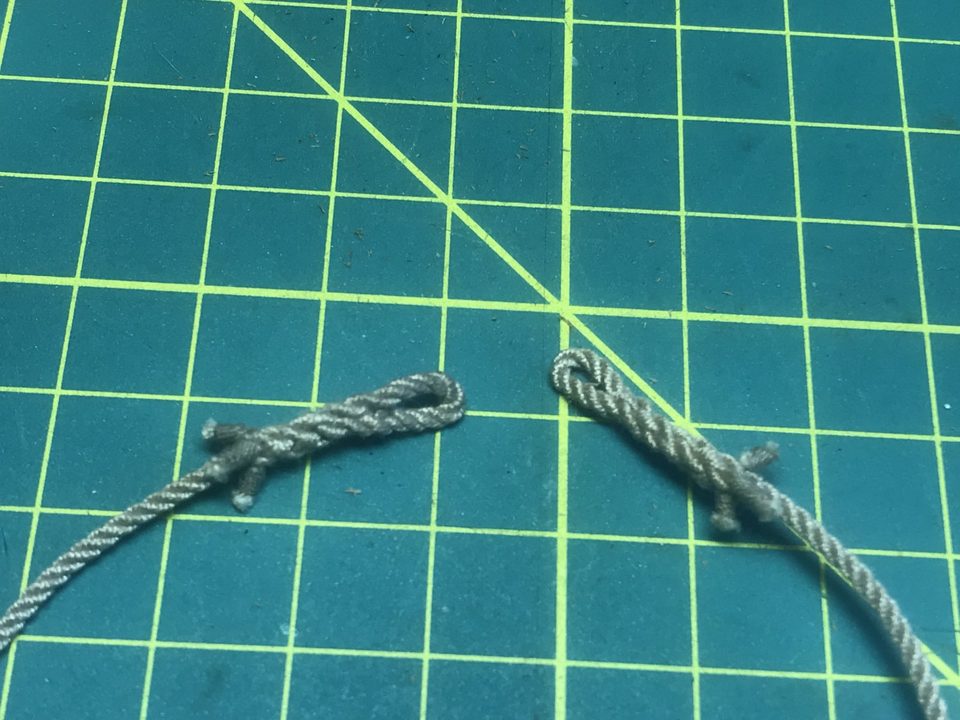
The two separate eyes with their whippings lie ready for the lanyard. Tip from Pingu57: Look on scoutwiki.org and type 'talreep' (lanyard) in the search box.
Glue the three rollers in the corners of the gun deck against the pillars of the upper deck. Lay the messenger in a loop over the deck, round the rollers and round the capstan. Hang the messenger from the deck beams on one side, as shown in The Anatomy of the Ship.
Result
Fun to do, even though it had to be done once more. On the upper deck the capstan will later actually be able to haul in the anchor cable to some extent, and that was the aim.
Problems met with this technique
The two eye splices of the messenger had been passed through each other and were jammed. Redone: eyes separate and joined with a lanyard (two half hitches, alternately through both eyes). (Tips from pietsan, *Hans*, Stephan Kertész, Pingu57) to the register
In the same series: Ropework
- Securing a small block with a seizing of silk thread
- Laying a coiled tackle line on deck with the tweezers method
- A messenger with turned rollers, eye splices and a lanyard
All how-tos · Ropework and knots: breeching ropes, gun tackles and coiled falls