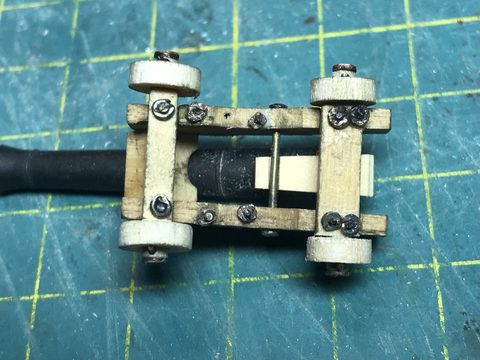
23 October 2021Ship's wheel and binnacle3 photos
The first rim of the ship's wheel is done: ten identical walnut segments, joined with epoxy and glued to a small faceplate with yellow glue, following the pdf Stephan pointed me to.
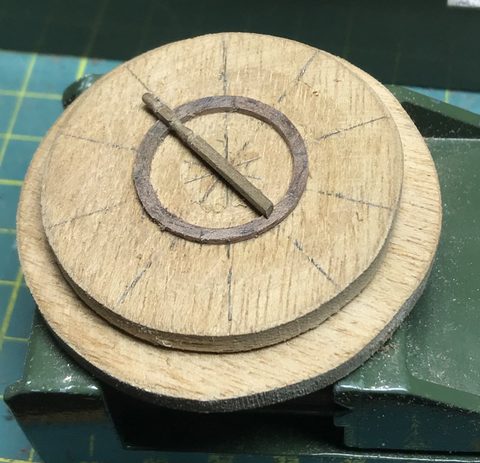
24 October 2021Ship's wheel and binnacle2 photos
Rim number two and the hub rings are finished and the first spoke is sitting in its notches; Stephan recommends pear, cherry or boxwood instead of walnut.
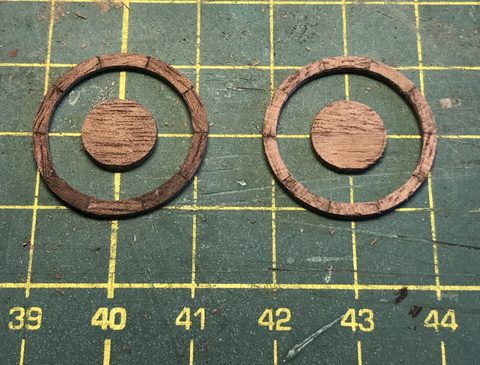
25 October 2021Ship's wheel and binnacle1 photos
Boxwood ordered from edelholzverkauf in Germany, and an evening of making spokes yields exactly one spoke: they break, and lining them up is a bit of a thing.
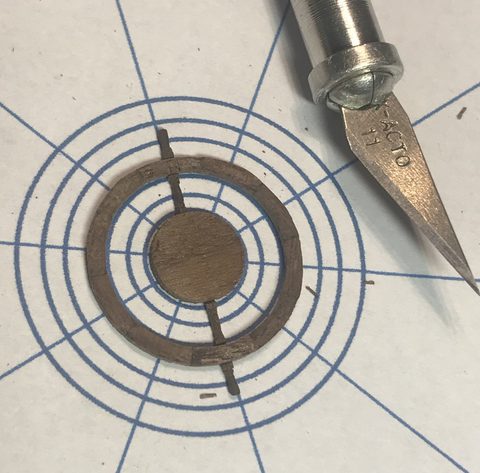
29 October 2021Ship's wheel and binnacle1 photos
New turning tools and the new wood arrive, the pace is two spokes an evening, and Stephan points to turning in a jig.
6 November 2021Ship's wheel and binnacle8 photos
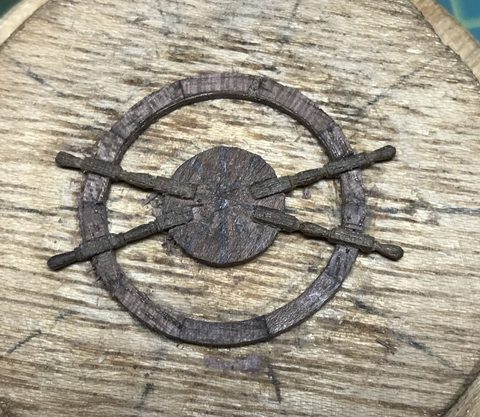
A handsome spoke that is too thick or a spoke to scale that is less pretty: it will be the thin one, and after a day of practice the method is settled, starting with a perfectly square strip of 1.06 mm.
7 November 2021Ship's wheel and binnacle3 photos
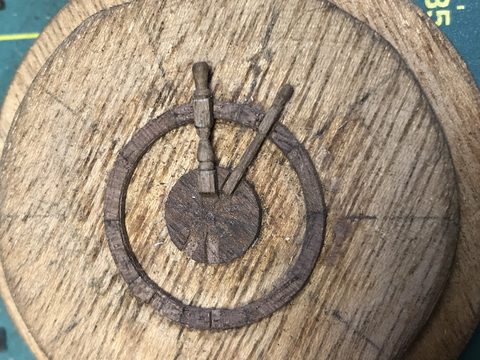
All ten spokes are in the wheel, but on releasing it from the faceplate the rim broke in three places; JDS73 and Stephan know how to do it better.
27 November 2021Ship's wheel and binnacle3 photos
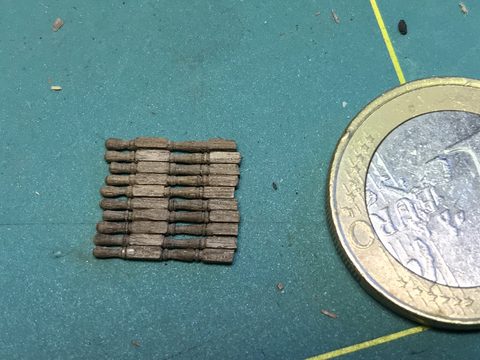
The second ship's wheel is finished, the 0.3 mm rings are on and the first stanchion is done; next to the kit's version the difference is obvious.
28 November 2021Ship's wheel and binnacle2 photos
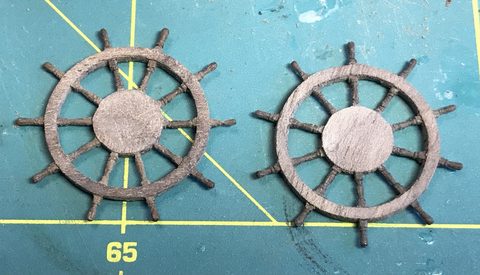
All parts of the ship's wheel are finished and sitting in Osmo oil; the open question is whether the wheel should be able to turn, and which way round the aft wheel goes.
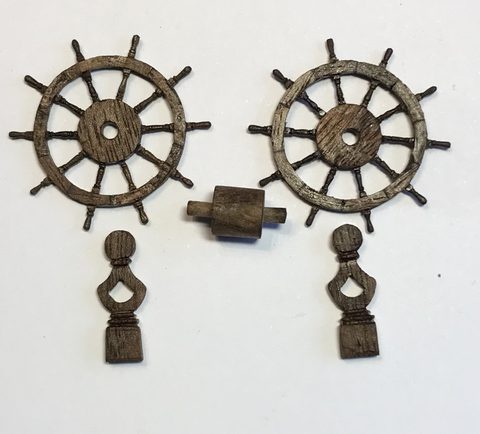
5 December 2021Ship's wheel and binnacle1 photos
A copper rim band as the finishing touch, probably not historically correct, and a first start on the binnacle in walnut.
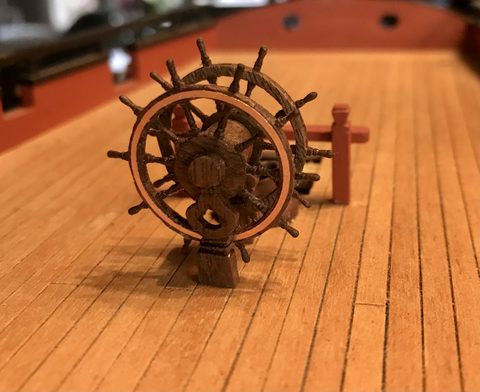
13 December 2021Ship's wheel and binnacle4 photos
The ship's wheel is fixed to the deck, rope and all; between the grating and the wheel the binnacle is still to come, and in front of the wheel a grating on either side for the helmsman.
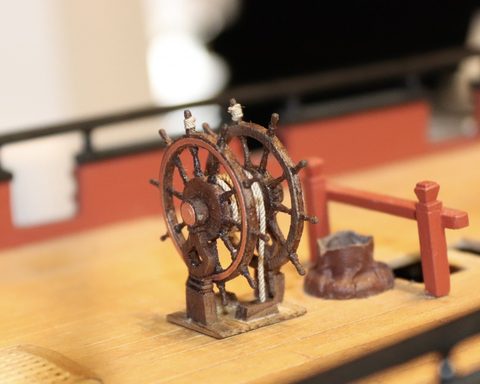
28 December 2021Ship's wheel and binnacle3 photos
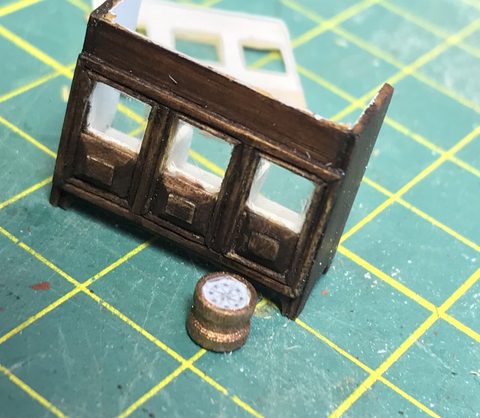
The binnacle in walnut came out too coarse and is being redone in boxwood with walnut stain; the lantern and compasses may be only 5 mm in diameter, and Herby63 suggests styrene.
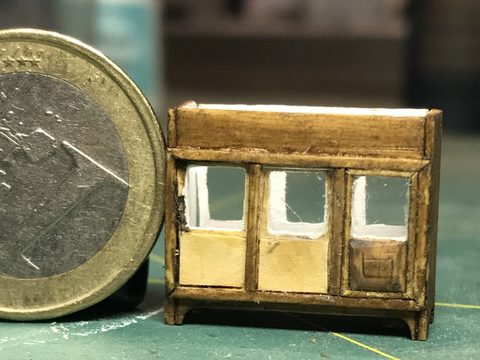
30 December 2021Ship's wheel and binnacle4 photos
The first compass (at the second attempt) and a lantern made of photo paper with a small copper lid, its openings cut with the cutting plotter.
3 January 2022Ship's wheel and binnacle3 photos
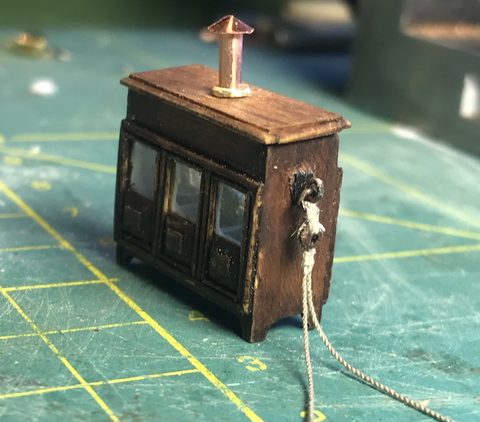
The binnacle is lashed to the deck; the small rings are not glued in and the top sits loose, so the compass and lantern can come out.
4 January 2022Ship's wheel and binnacle7 photos
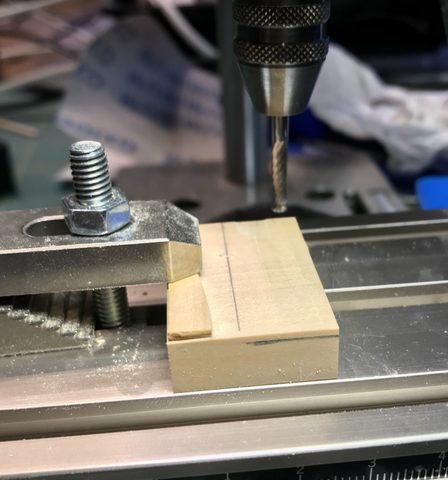
The gun carriages for the 9-pounders are scratch-built from Castello boxwood: the cheeks are milled as a stepped profile on the cross-slide table, and the first attempt ended up with steps that were too deep.
7 January 2022Ship's wheel and binnacle4 photos
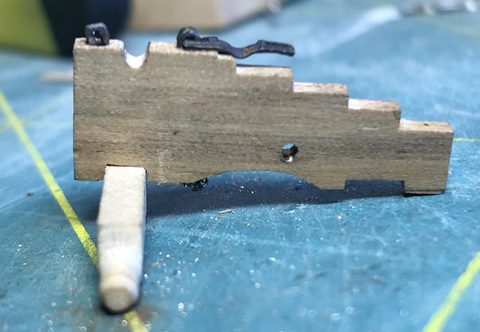
The first cap-square is on and the pins are secured without glue using rings of 0.65 mm; the gun carriage tilts aft and Stephan puts that down to the camber of the deck.
8 January 2022Ship's wheel and binnacle9 photos
The first gun carriage gets its ironwork and rings, and washers are made by briefly filing the head of a brass pin in the lathe.