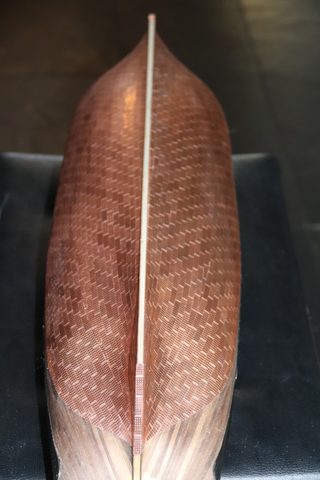
23 December 2018Coppering8 photos
Decision to copper the hull before fitting the mouldings, three questions for the experts, the waterline marked out and the first plates laid at the keel.
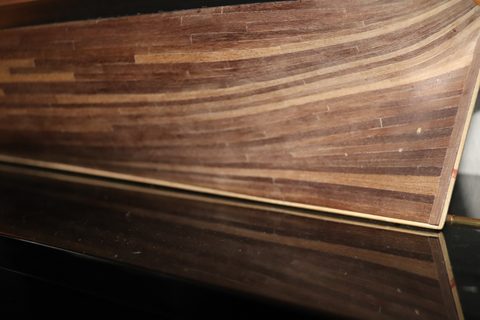
24 December 2018Coppering3 photos
The first rows along the keel over the Christmas days, with a lesson about laying the plates tight and a third row that has shifted.
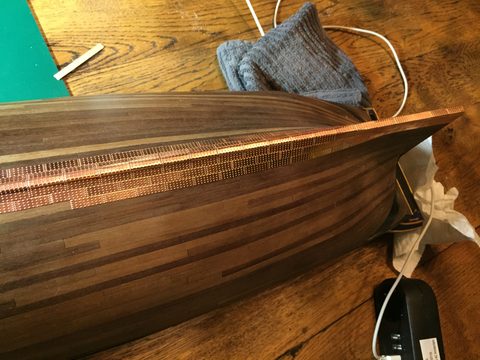
26 December 2018Coppering5 photos
The plates sit lower on the port side than on starboard and follow straight lines instead of the strakes: on Piet's advice everything comes off.
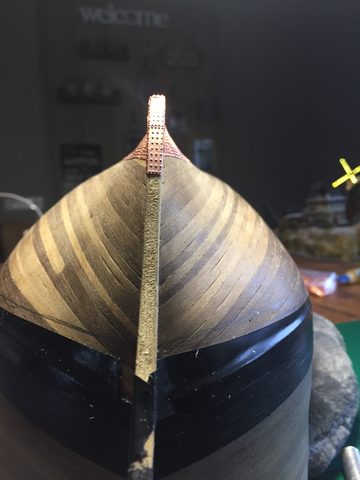
27 December 2018Coppering13 photos
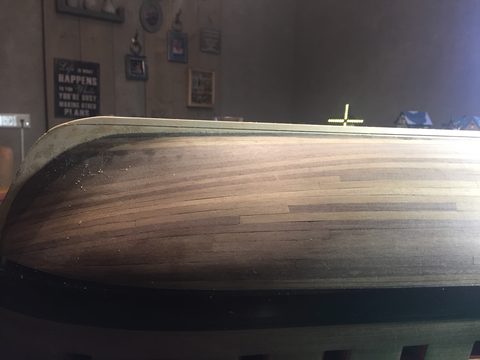
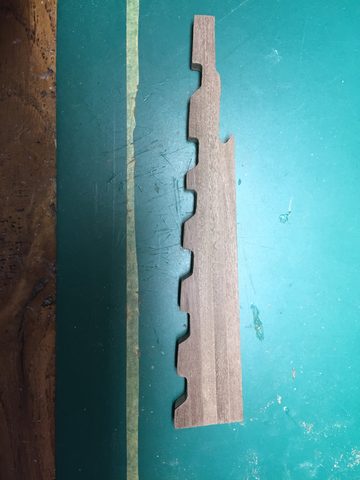
Keel deepened to about 6 mm, rudder and sternpost tapered, Henk's drawings of the English system, and the belts marked out on the hull with a small template.
28 December 2018Coppering3 photos
Decision to go for five rows below the waterline, rudder planked and sanded to a taper, and the waterline marked out again with the induction hob as a level surface.
30 December 2018Coppering3 photos
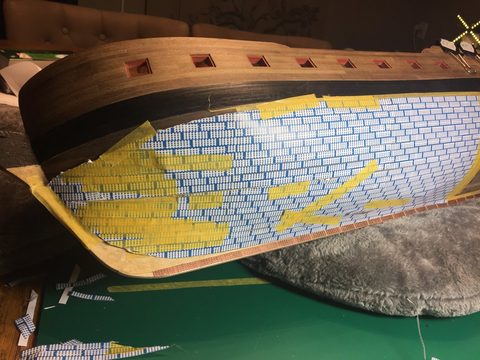
The plate pattern printed at full size and laid on the hull as paper strips to find the gore lines, then the first nine rows laid.
2 January 2019Coppering3 photos
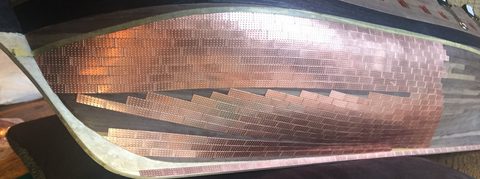
The lines run as intended, the first gore line is closed and the bow is coppered, with one wrong choice in the pattern.
6 January 2019Coppering1 photos
The keel is coppered and Piet asks why the pattern shifts halfway: a slip in my thinking at the stealer.
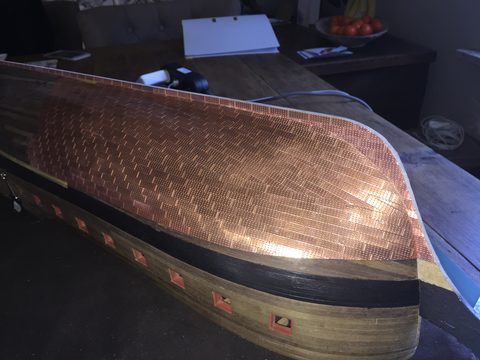
13 January 2019Coppering2 photos
Start on the sternpost end, colour difference in the copper, and the advice not to varnish but only to remove the glue residue.
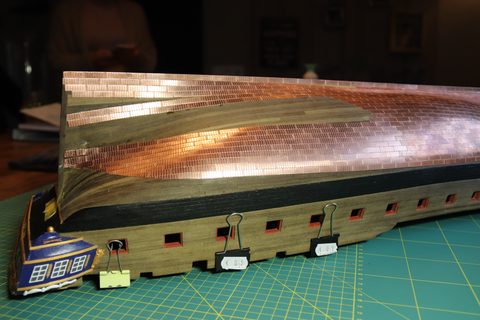
9 February 2019Coppering4 photos
After two months the port side is coppered and cleaned with sticker remover and steel wool; the stock of plates is already well past halfway.
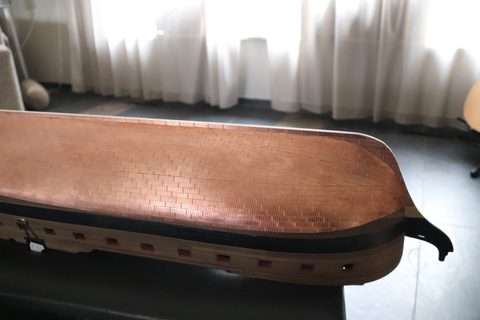
10 February 2019Coppering2 photos
On the starboard side a crooked waterline put right, and the discovery that the port side needed nine rows to the bow and starboard eight; decision not to tear it off.
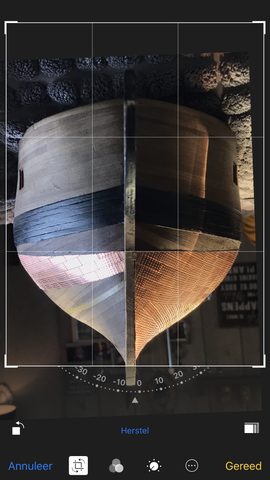
28 February 2019Coppering1 photos
After a few weekends off, back to work on the starboard side, this time with the line to the bow marked out with tape first.
16 March 2019Coppering5 photos
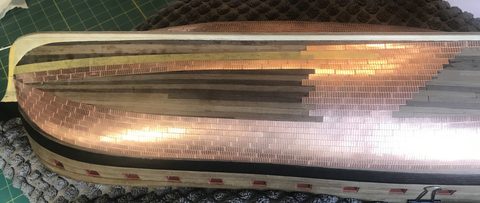
Both sides of the hull are coppered, with thanks to Piet for sending the shortfall; only the rudder remains.