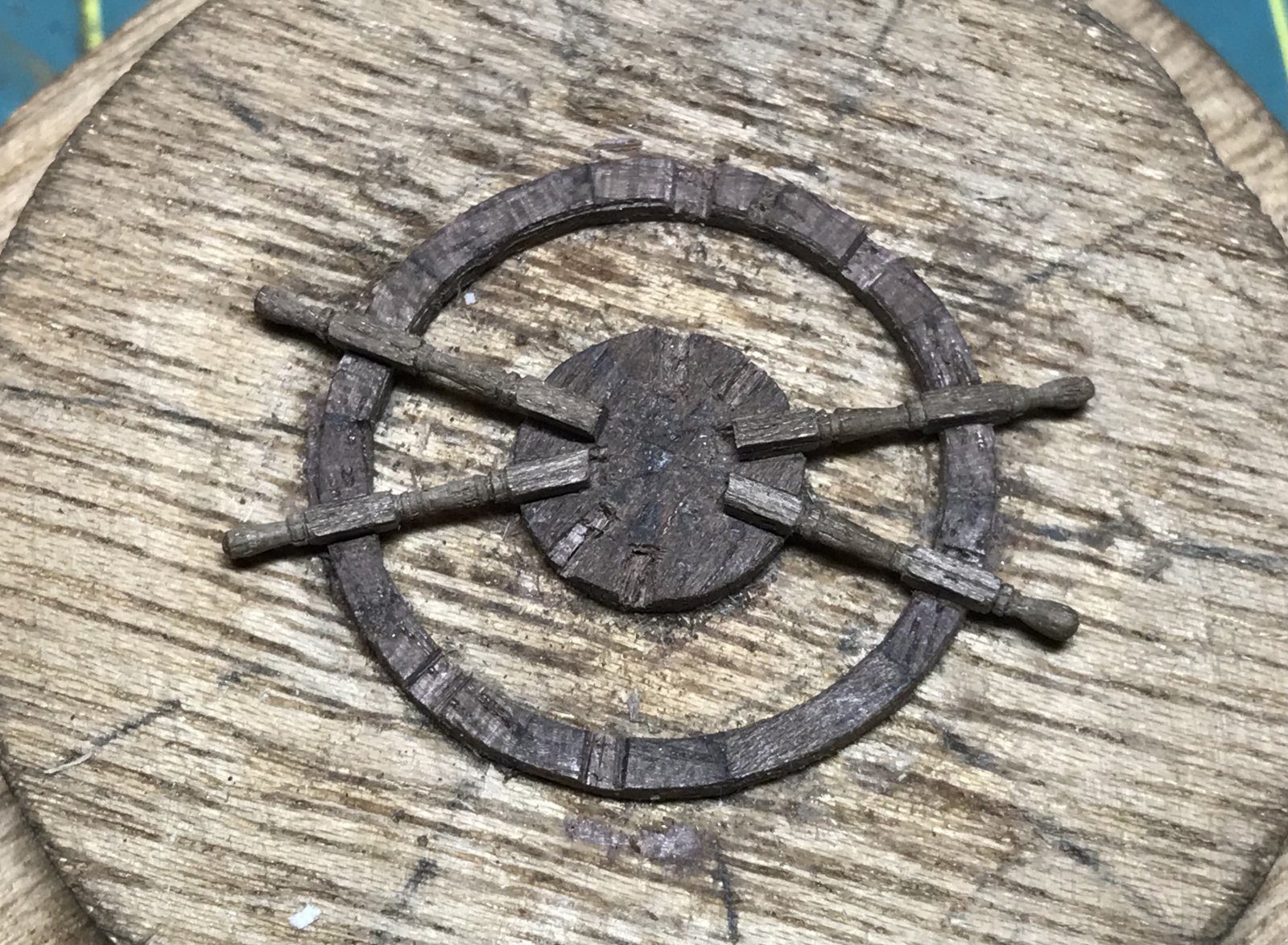
Good-looking or to scale
The dilemma
I have tried just about every technique Stephan posted and keep getting further. Making a little jig from a blade now works. The holder for turning the wood round doesn’t, because I don’t use round stock: the square part kept going partly round as well. So now I snip off a very short stick, put it in the lathe and steady it slightly with my finger while turning, so that I can apply more pressure when the pre-shaped blade goes in. That works.
But now the dilemma: somewhat acceptable to look at, or to scale. I find the vertical spoke much prettier, but it is nowhere near to scale. It is 1.5 mm thick while the wheel is 1.3 mm, and converted, the spoke would be about 10 cm thick. You would need hefty hands for that. The other comes to about 5.7 cm, and that is fine.
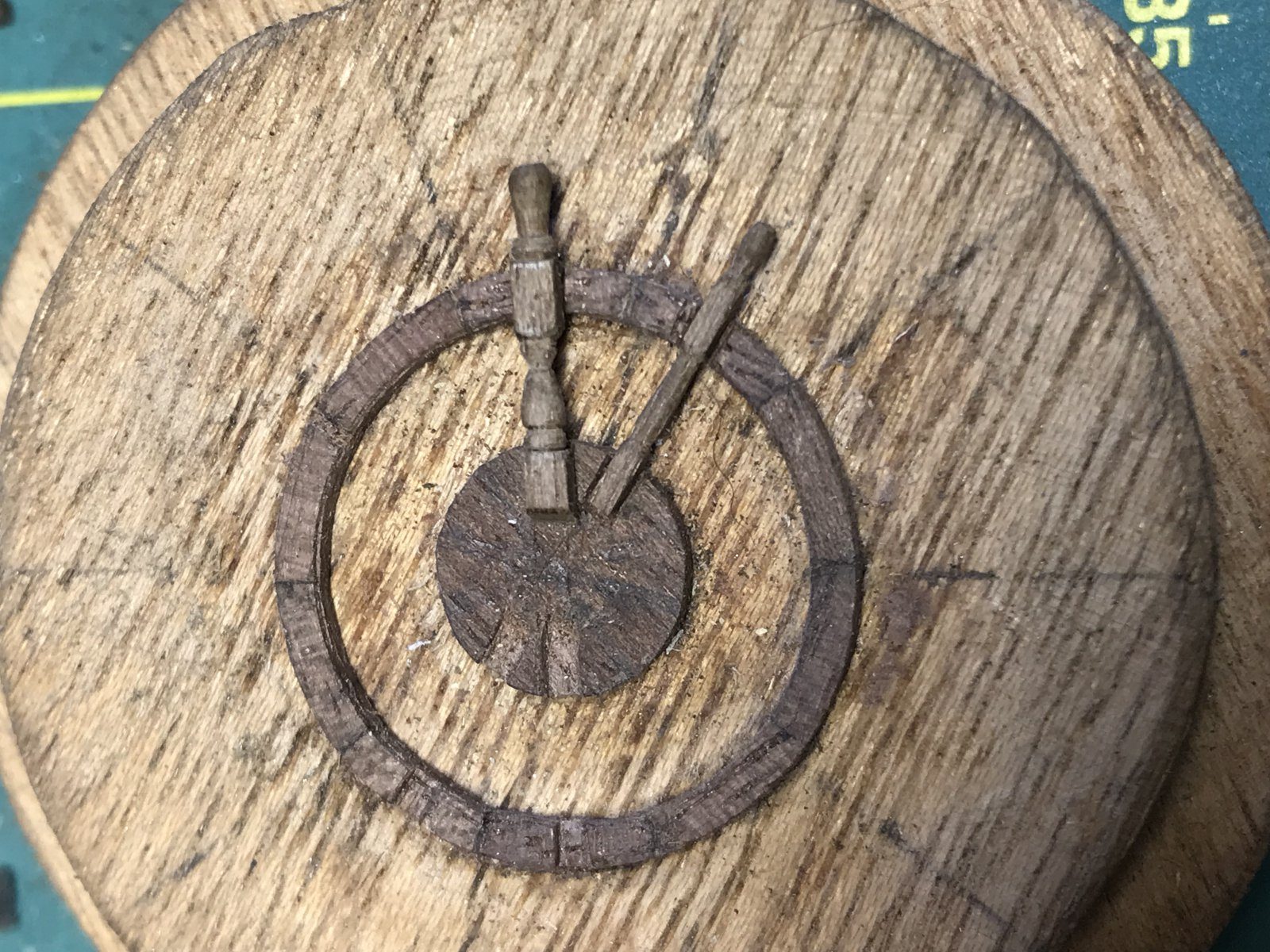
Pingu57 and Erik B chose the thick one, although Erik B first wanted to see it on deck among the other deck furniture. walter10 chose the one on the right, because in its place the less pretty bits won’t stand out, and Sjors thought both were fine. Stephan suggested reducing the handle section with a fine file and pointed to his Corradi files (Pferd). Every set of files I have bought so far was worthless in no time, so I’m getting those. Pingu57 also suggested sanding the parts that go into the rim a little thinner. First finish the thin one, though, because scale is a bit of a thing.
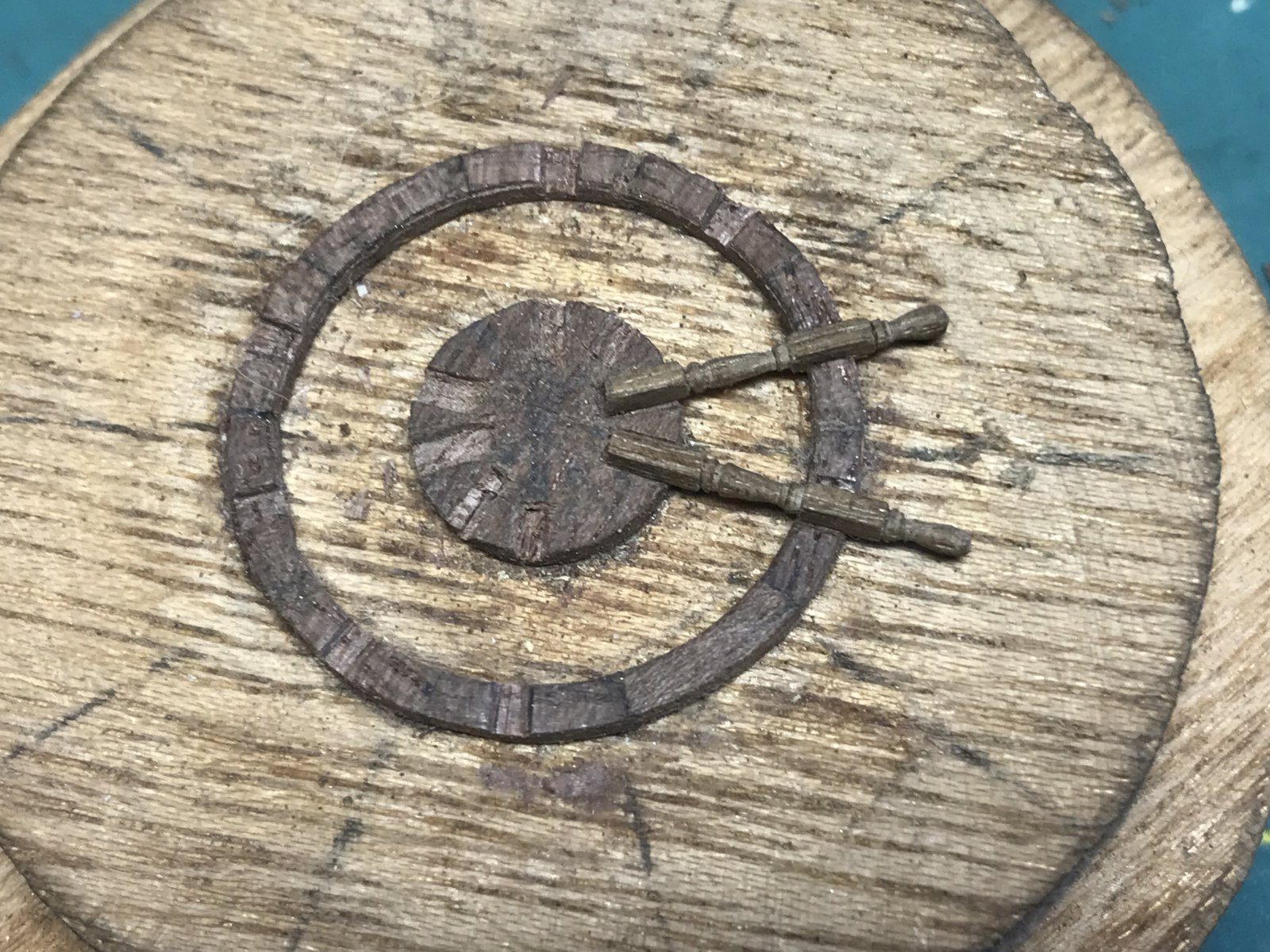
That same afternoon I had made up my mind. Practice makes perfect: I finally manage to put more detail into the thin spokes and get them roughly the same.
The method
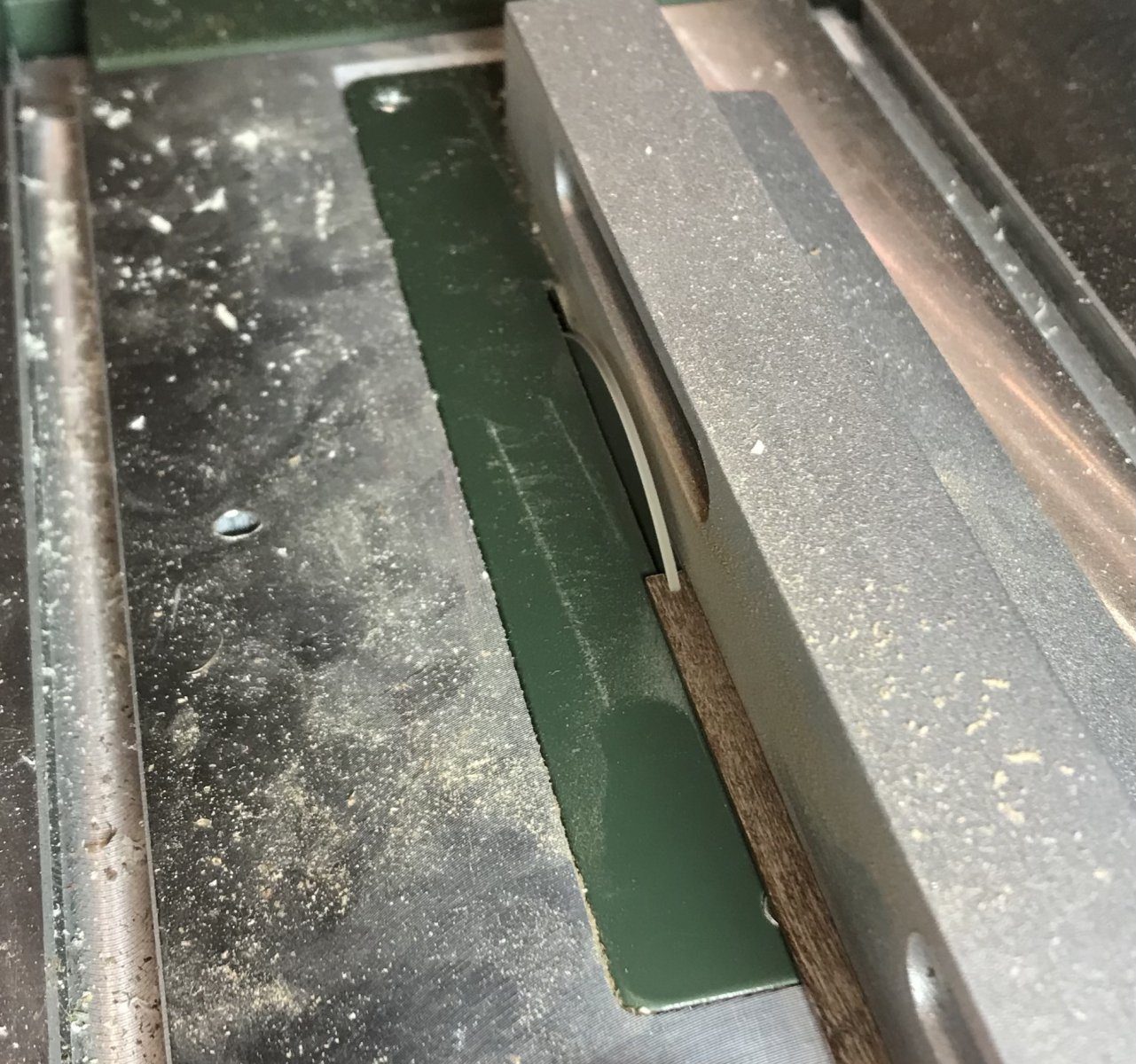
Step 1 is a perfectly square strip. I do that by cutting a strip 1.06 mm thick to exactly 1.06 mm on the saw. Not too long, otherwise a deviation creeps in halfway. That 1.06 mm cost me a few attempts, but perseverance pays.
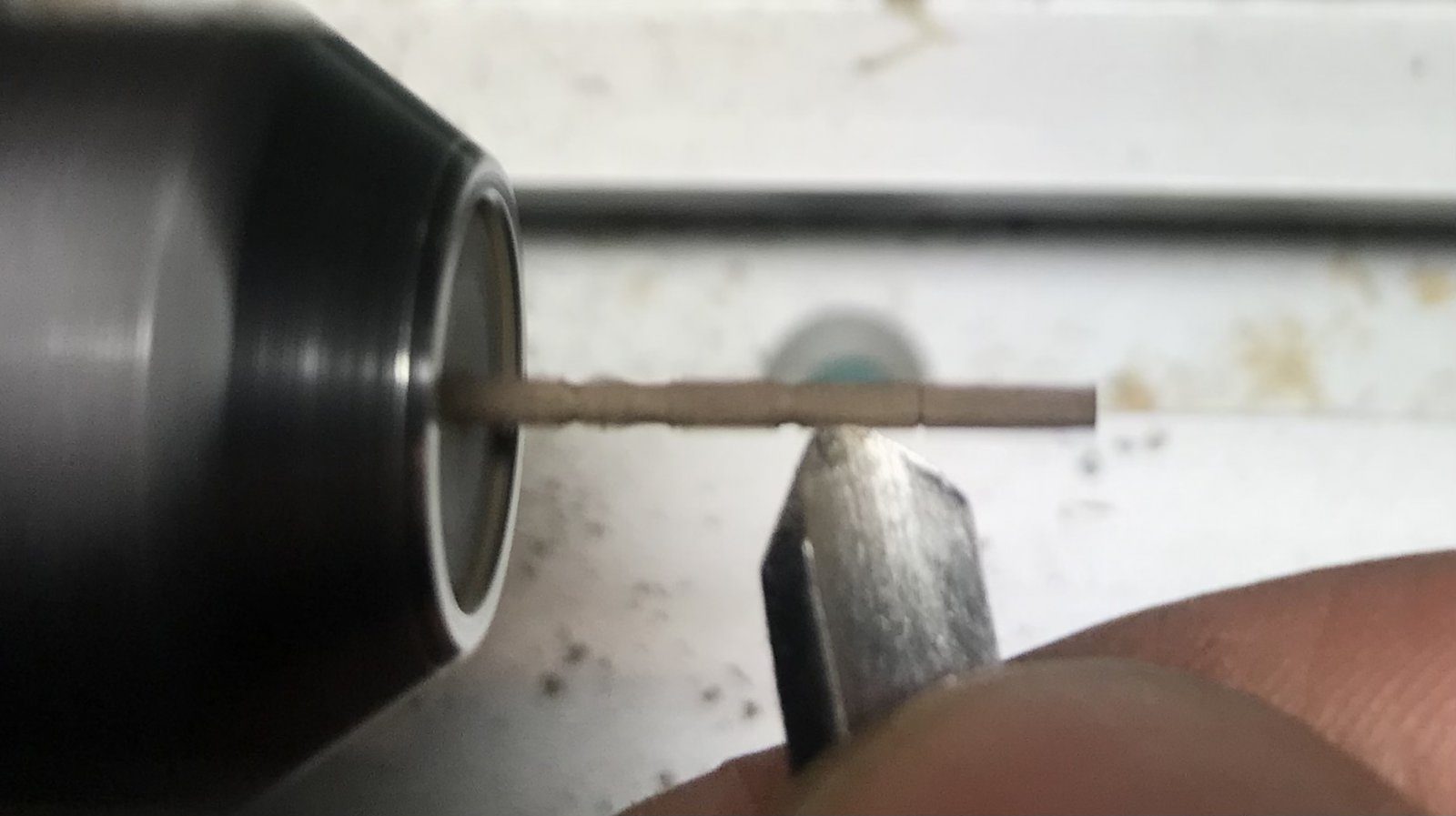
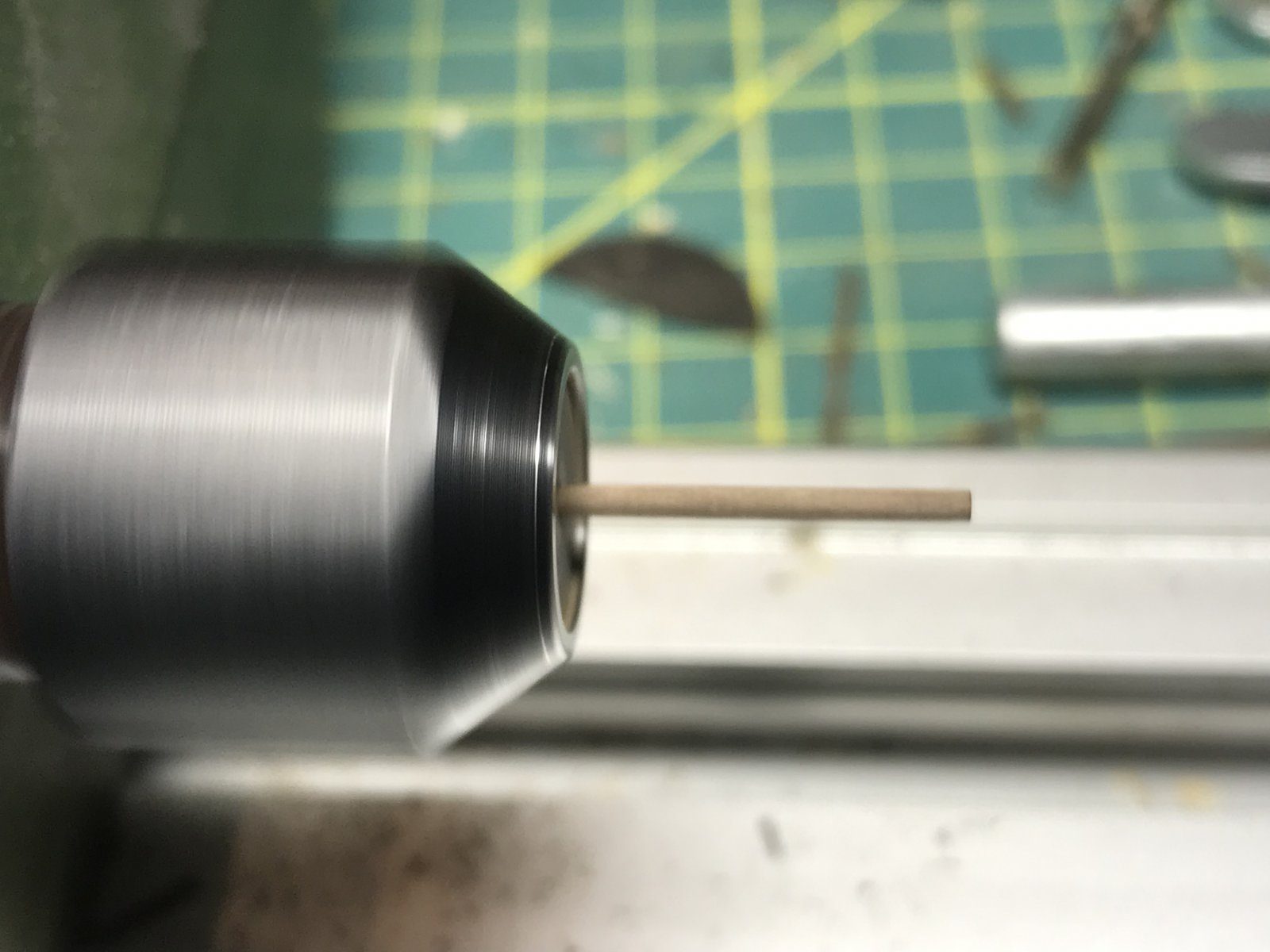
The strip goes into the lathe. That is very precise work: 0.1 mm off centre or askew gives a flat side when turning. This step takes the most time.
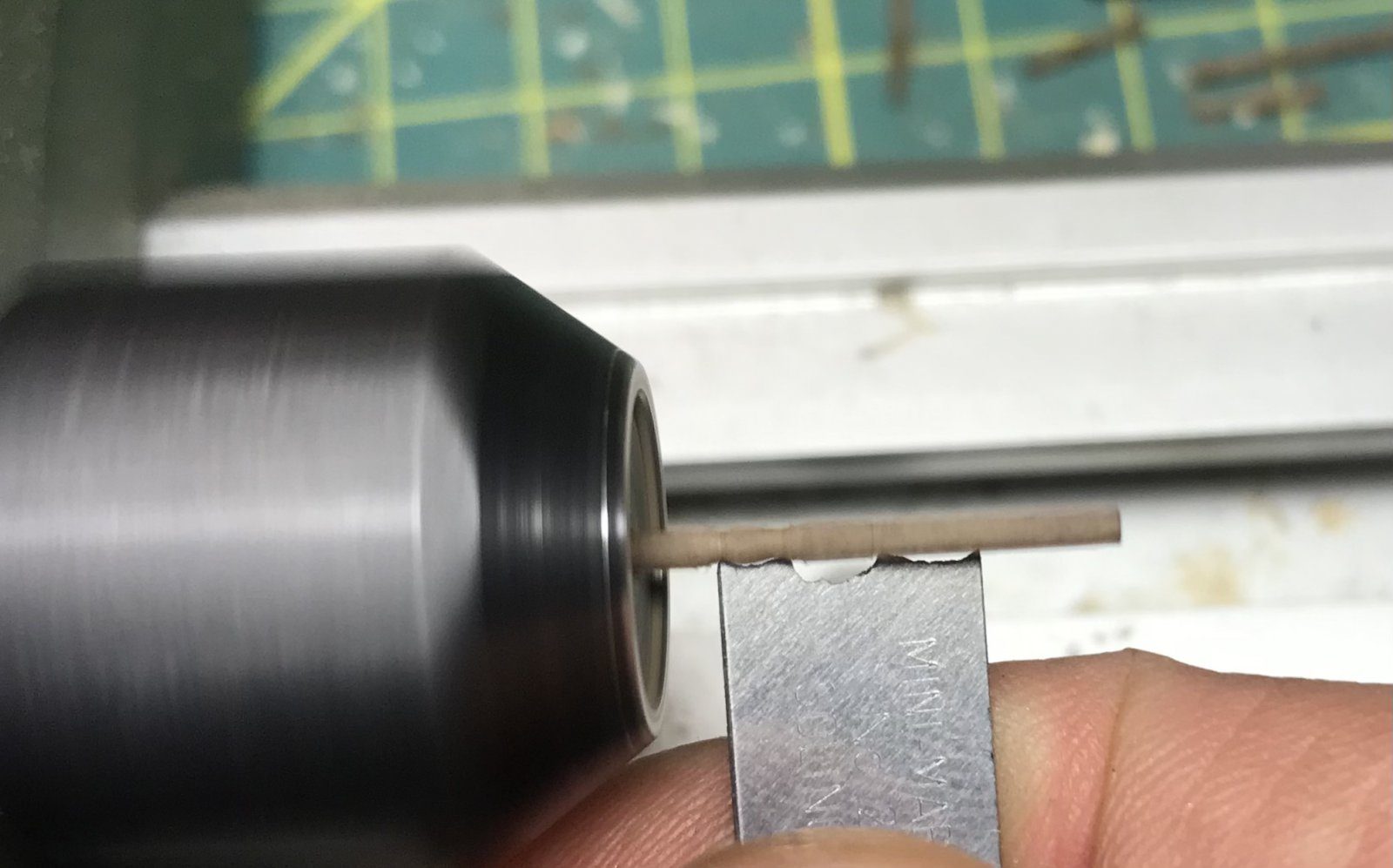
Then hold the blade against the strip to get the spacings right. I don’t turn it all the way down with the blade, because then they invariably break.
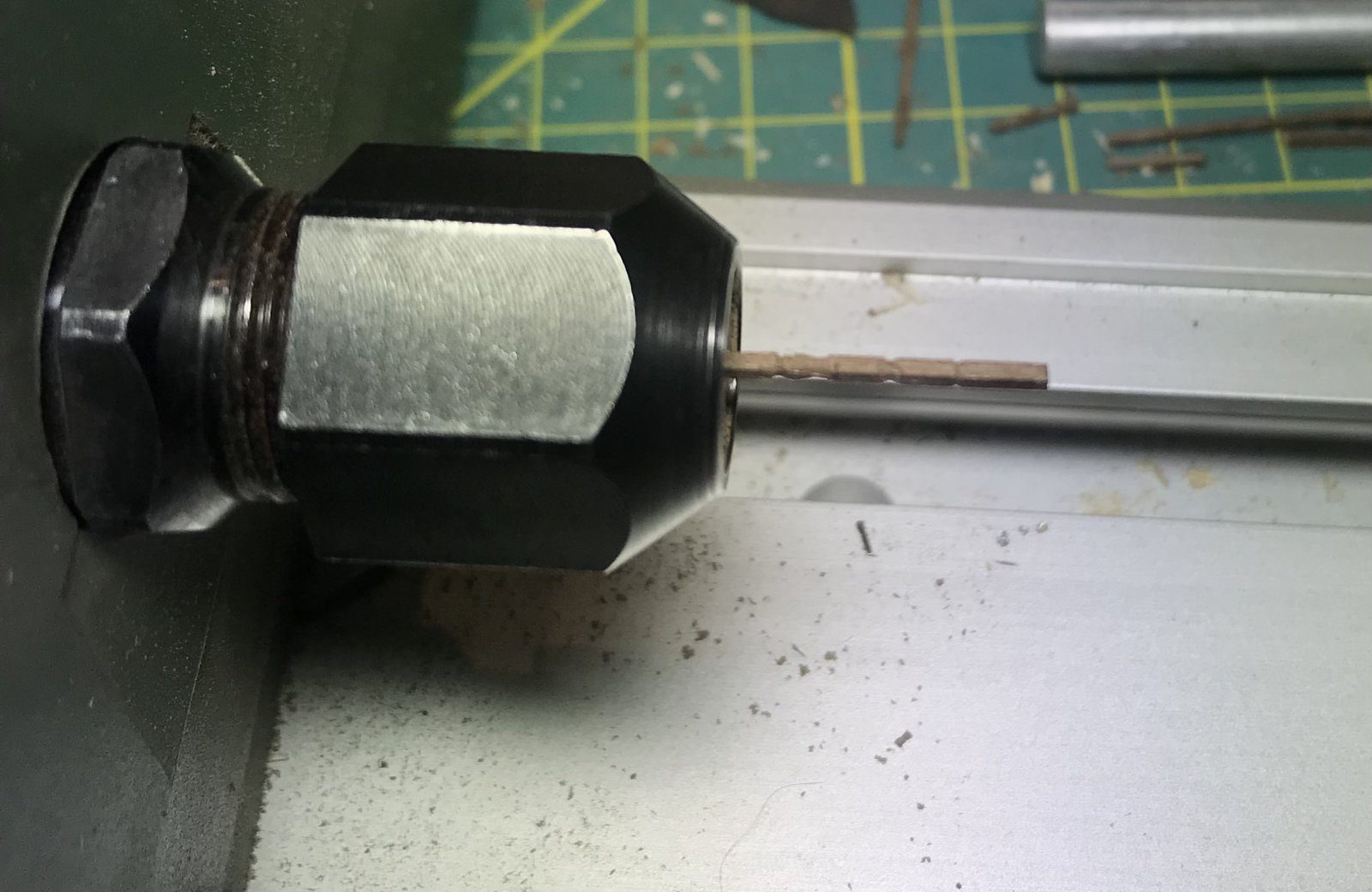
The final turning I simply do with a small turning tool. Because the spacings are identical every time, the spokes come out reasonably identical too.