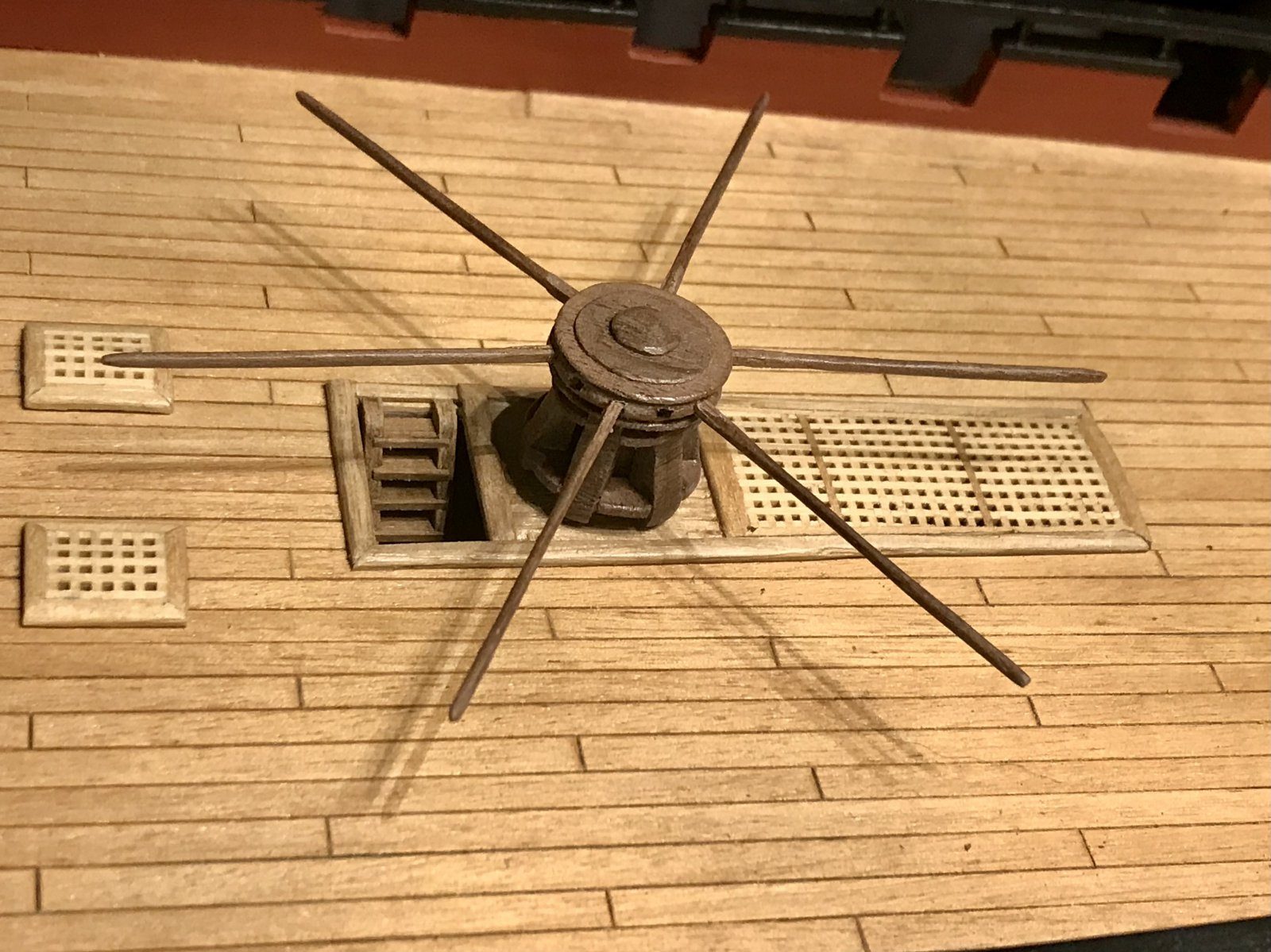
Grating, ladderway and capstan bars: the capstan is finished
Grating and ladderway
I have extended the sides of the grating that the capstan stands next to, so that it forms one unit. I have also let the ladderway run through as a single piece. It probably is not how it should be, but I found it calm and pleasing this way. The small plate under the capstan is oak too, like the edges of the grating. The kit comes with a walnut plate, but that was yet another shade from the walnut of the capstan. So I made a plate myself. Everything still has to be glued down and given oil or varnish.
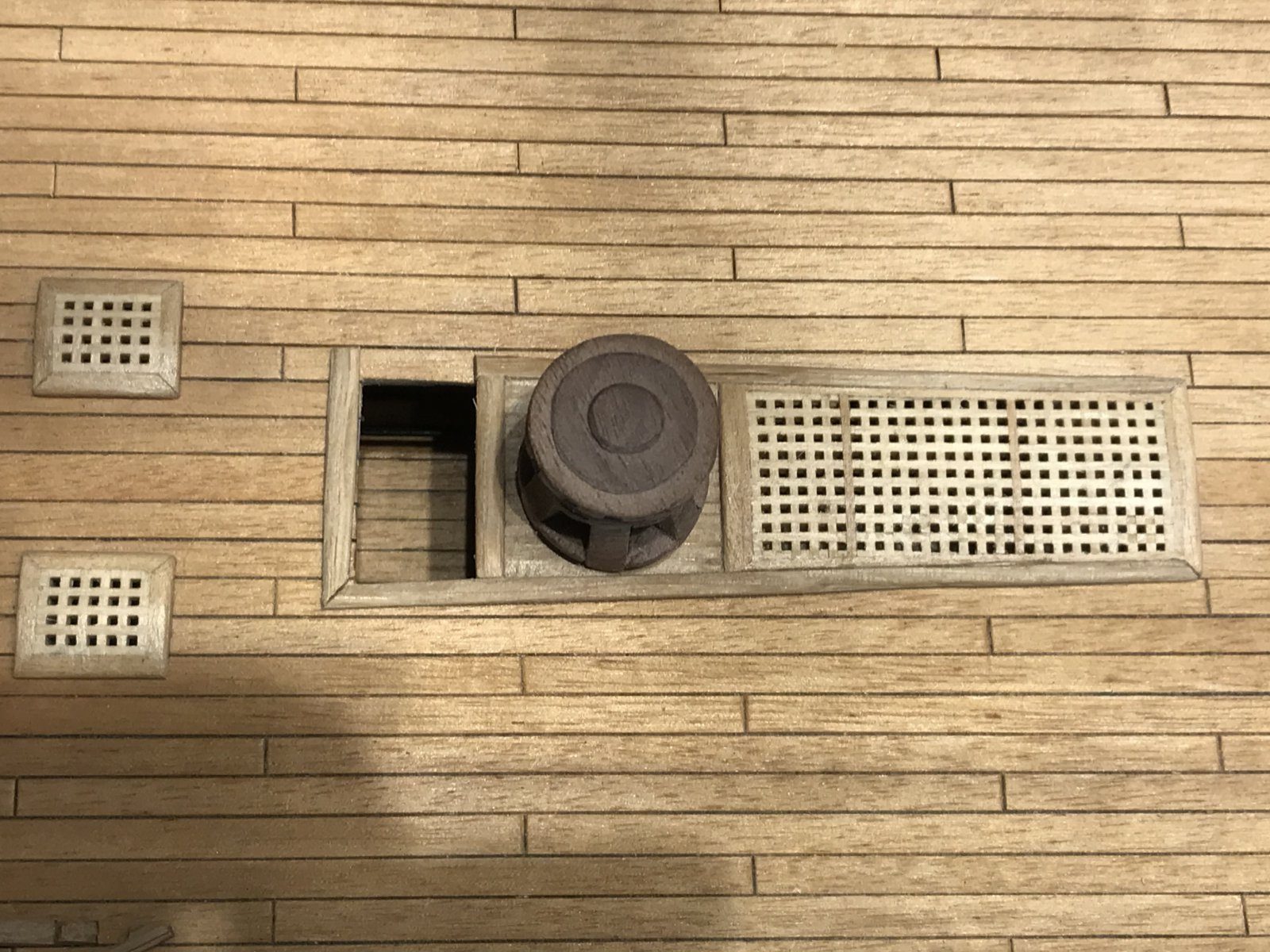
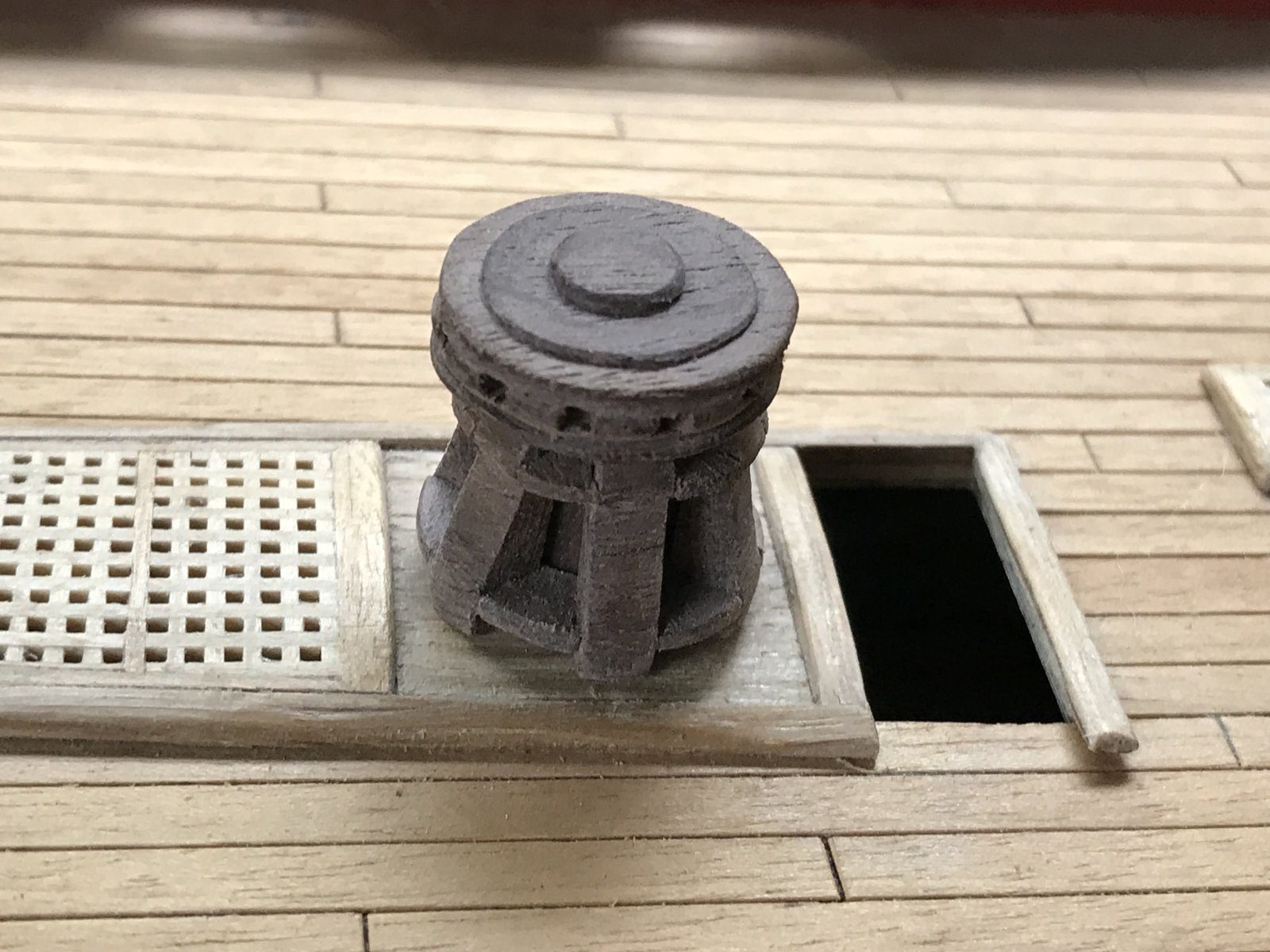
Herby63 thought there really ought to be a small grating over the ladderway, otherwise the inner positions at the capstan would not stay manned for long. Oh no, they just jump across.
Capstan bars
With a new blade for the circular saw I have made the first six capstan bars. Twelve fit in, but on many models I only see six. I based the length on the drawings in The Anatomy of the Ship: a little over 3 m, which is 4.9 mm at scale. The thickness is about 1.25 mm, about 8 cm at full size. Hans Groenenberg thought that a nice thickness.
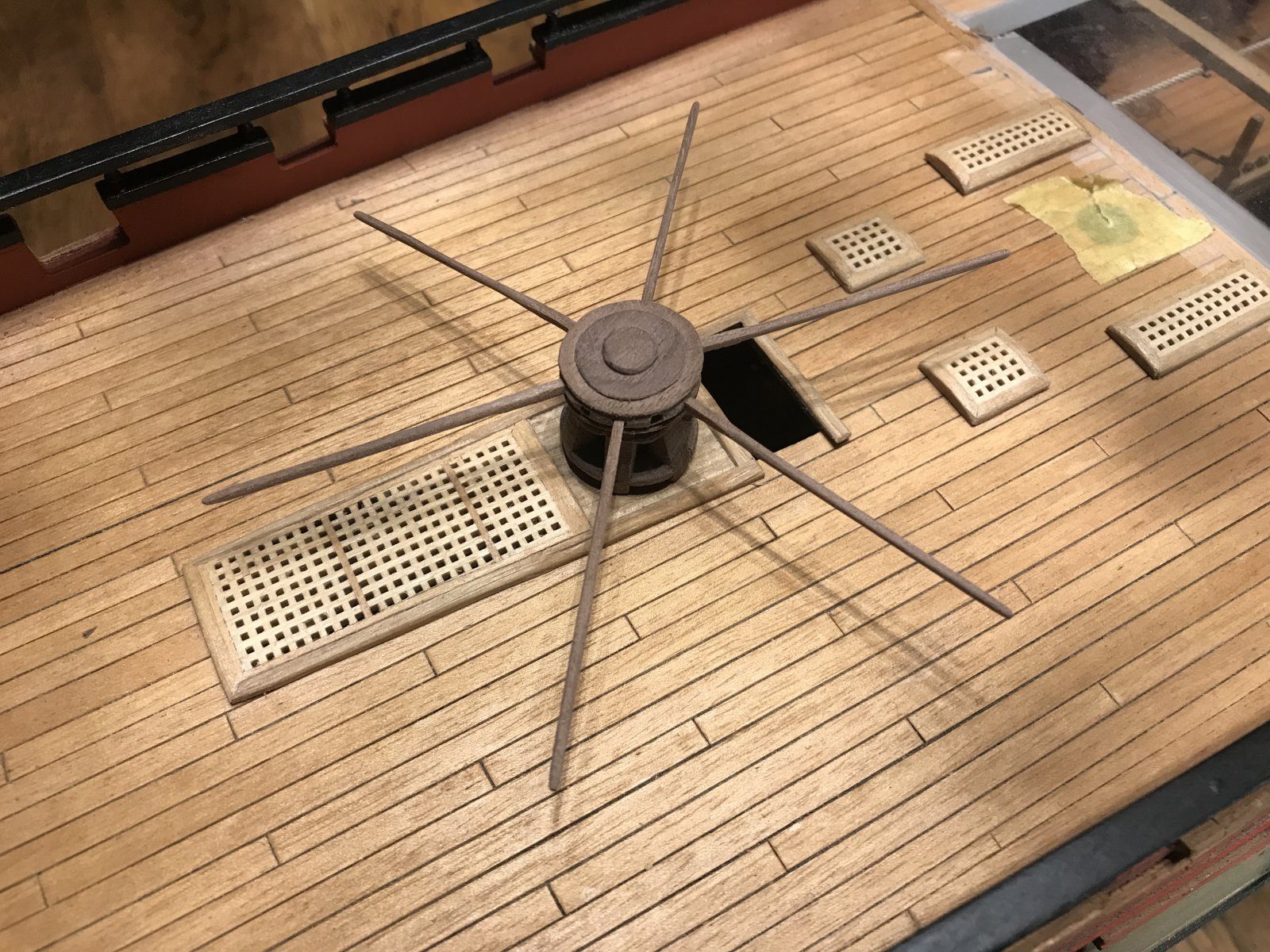
To my question whether six or twelve is historically correct, Piet had a nice answer: that does not really come into it, but on a model a capstan with six bars looks more subtle, and with all twelve you cannot see the wood for the trees. Perhaps I will make twelve after all, leave six in and lay six on the deck. That way I also more or less comply with what Mondfeld says about it: bars in a capstan are only correct when they are in use. In my case they are just being shipped, or something like that.
Glued
On 28 September it was finally finished, glued and all. The ladder is in as well, only the stanchions for it still have to be done. I drilled the capstan bar sockets slightly deeper, so that the bars sit firmly without glue. That way I can still take them out easily; fixing them now did not seem practical.