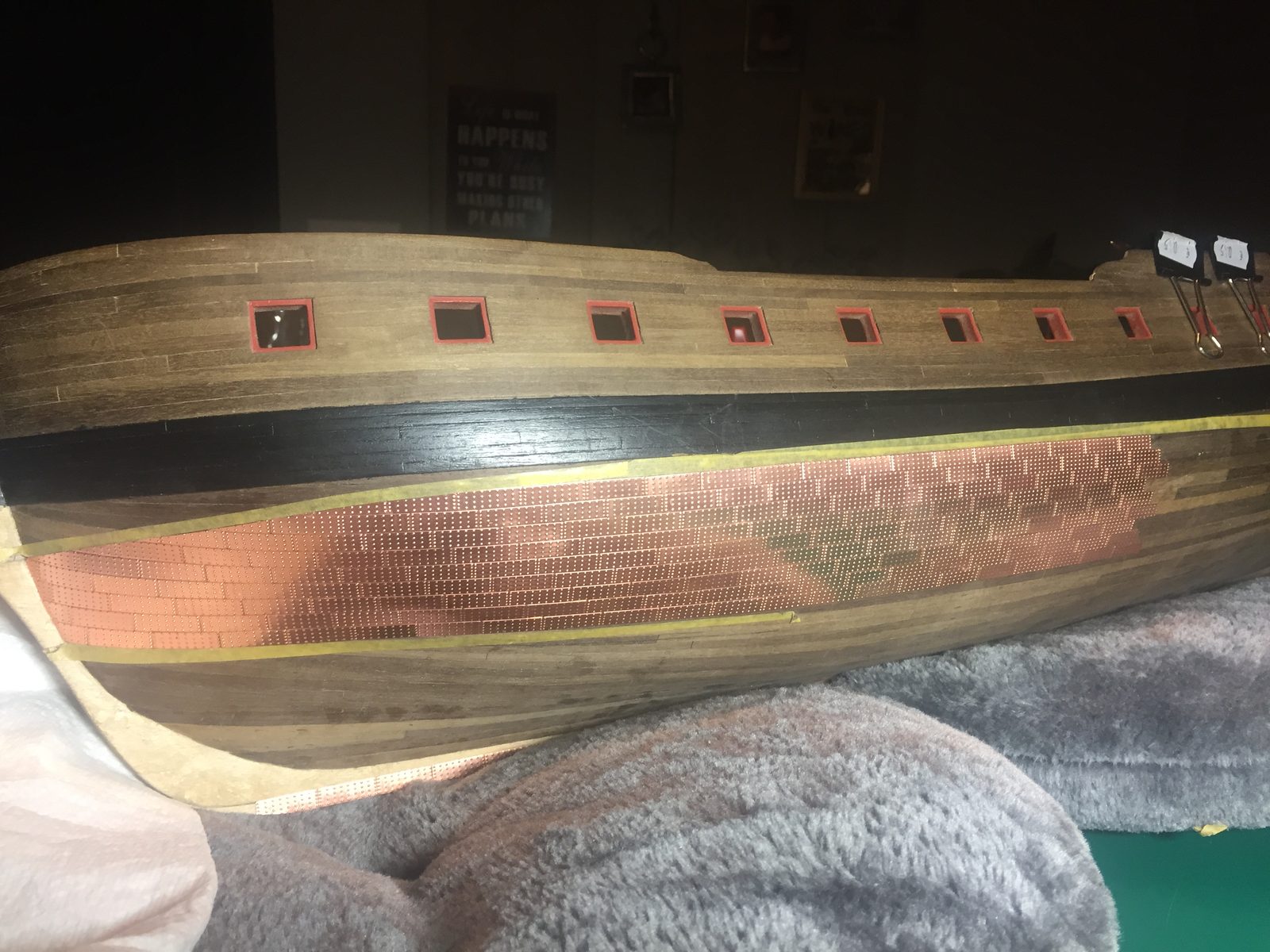
Paper plates
It bothered me that I could not properly derive the pattern Henk suggested from Paul’s drawings. Those seemed to be meant for a much rounder bow. So I changed tack. On the computer I recreated the plates at full size, printed them out and stuck the sheets together. Then I cut them into strips, stopping just short of the end, so that I could lay the strips on the hull one by one as if they were real rows of plates. Only then did I see clearly where the plates really have to be cut at an angle: the first gore line comes at 11 plates from the waterline, then one more right under the ship, but you cannot see that one.
A single row along the waterline still strikes me as a bit odd, also because historically that was only done from the 19th century onwards. So I am now choosing the other example from Henk’s website, where the waterline is finished with a 1x1 mm strip. Any unevenness then disappears behind the strip. If I do not manage it this time, I am out of ideas.
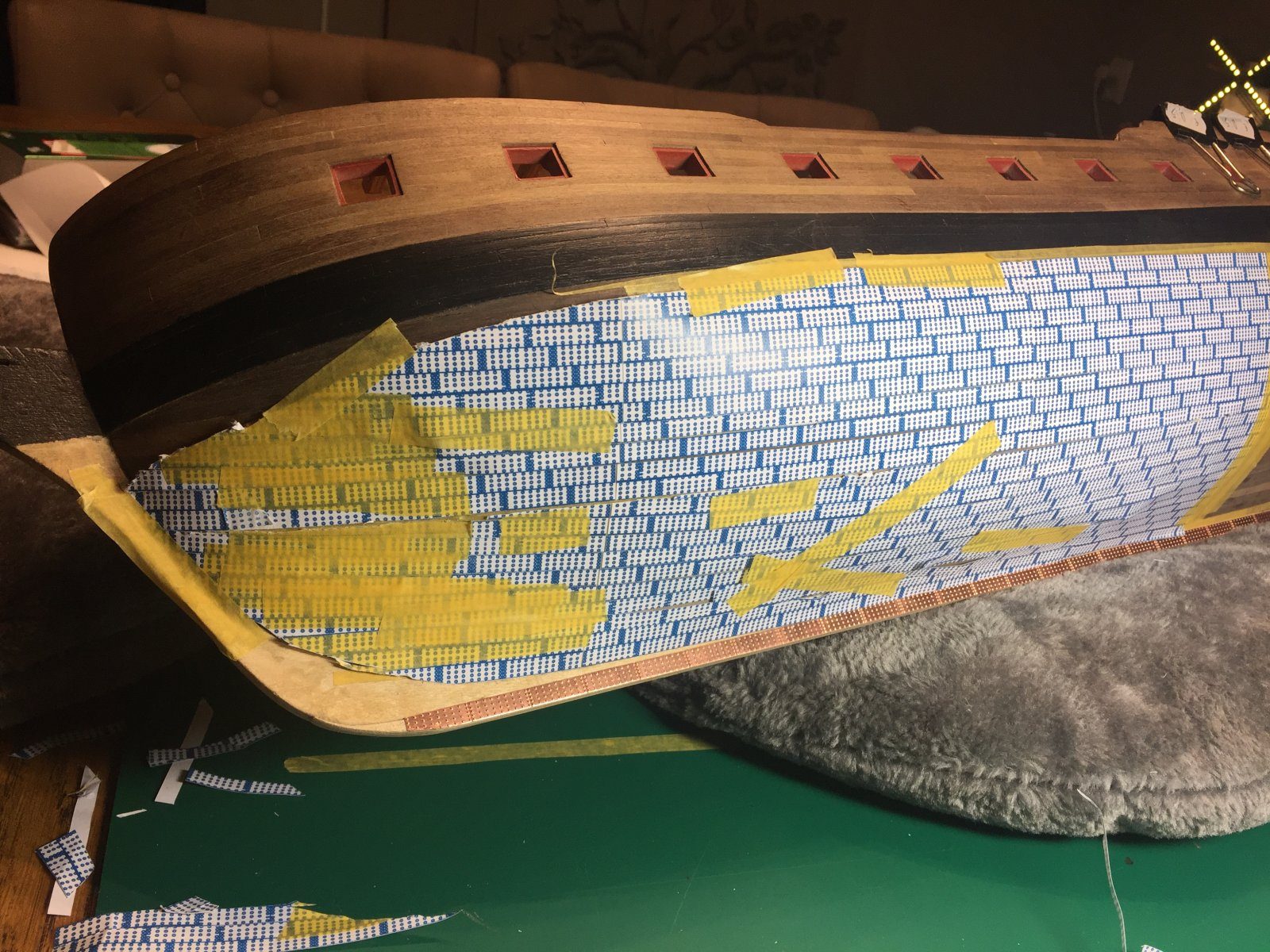
In the afternoon I made a start. My paper exercise does not seem to be entirely accurate after all, but I think the way I am going about it now will work. It is now simply a matter of gluing on an awful lot of plates, and that is anything but quick.
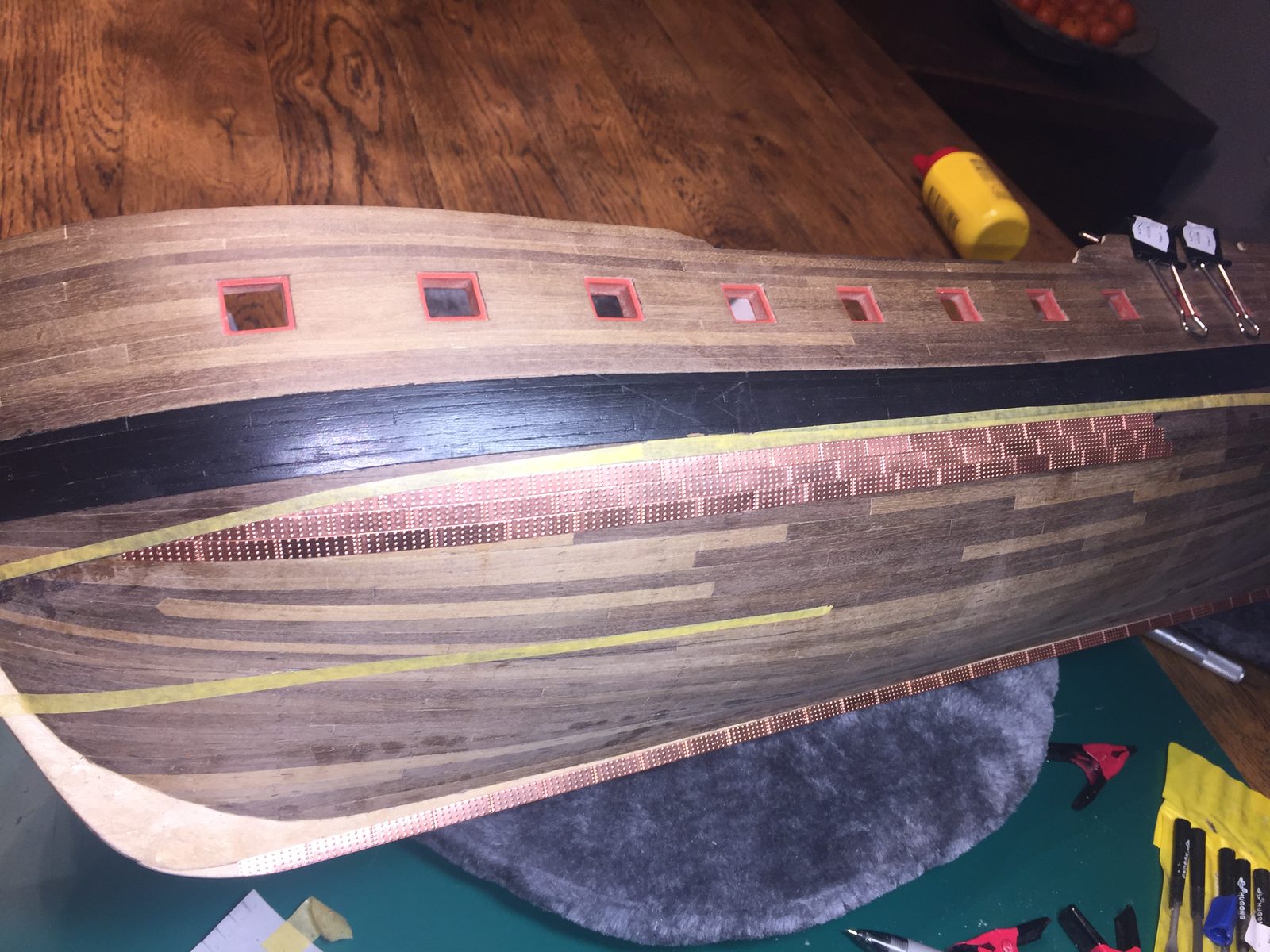
Part 1 of the plan has worked: the first nine rows are on, intact. I had to fudge a little here and there, but in the end result you only see that if you know. Unfortunately the pattern shifts slightly; there was nothing to be done about that. Now copper down to the keel amidships, and then from the keel forward to the stem again, so that I can lay the curved sections up against the line. Then I still have to work out the sternpost.