The insides of the ports, and the colour red
On the port side the insides of the gunports are finished. I had skipped the ports that get a lid. My idea was to do those only once the outer planking is on, so that I can set the depth of the inside at exactly 1 mm and the lids fit properly. I saw that Piet hadn’t done it that way, so I asked whether that had caused him trouble later on.
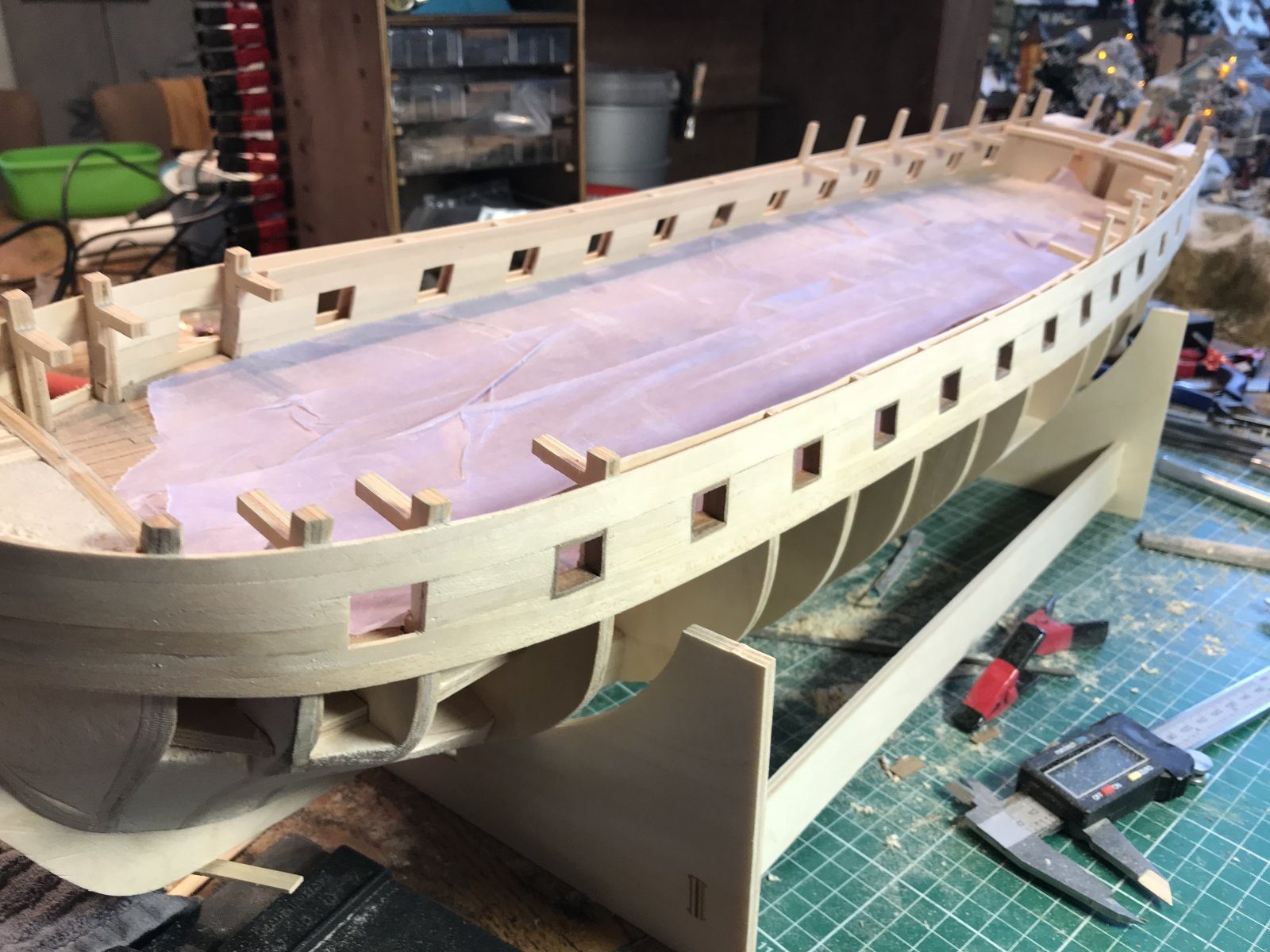
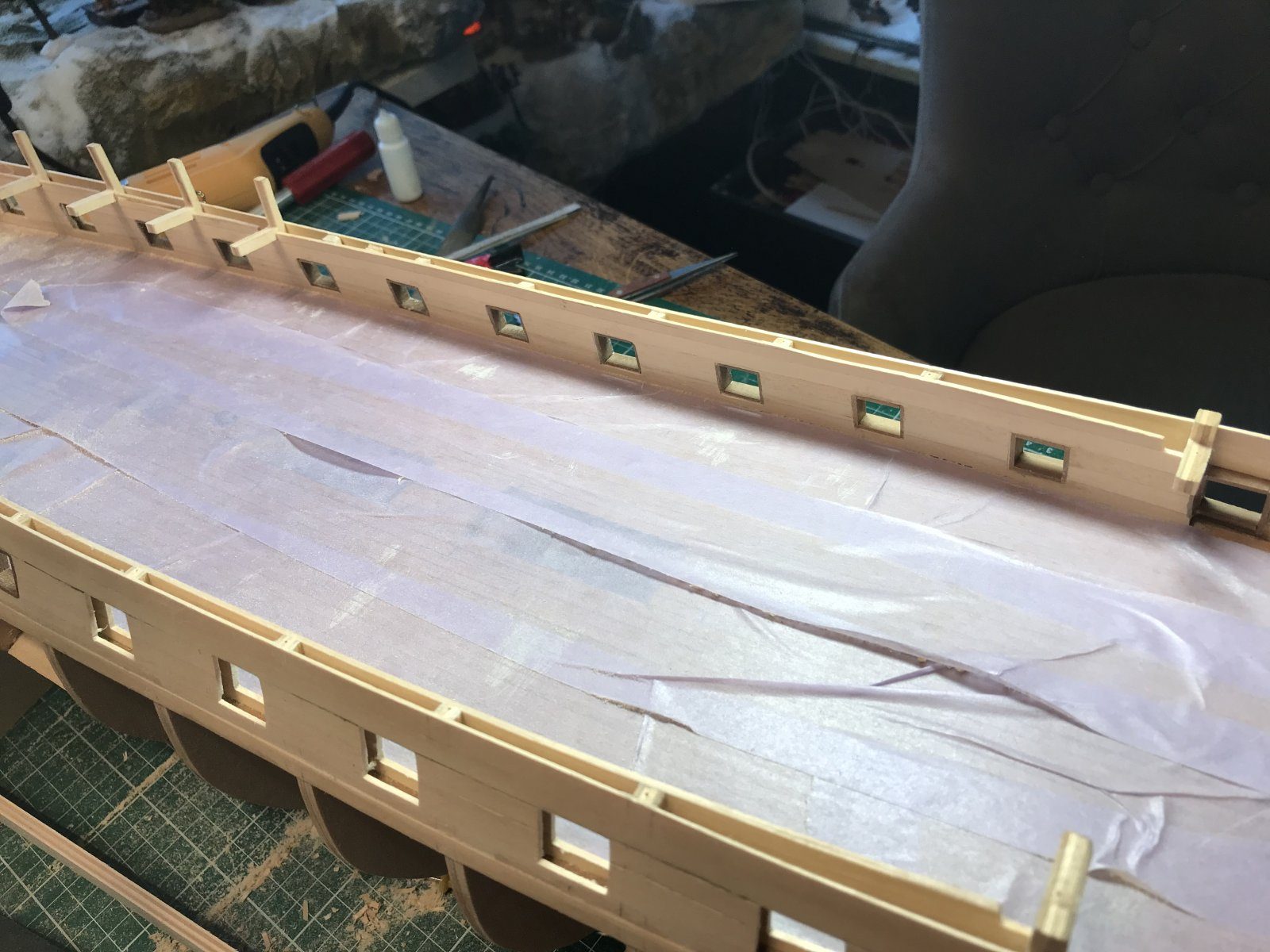
According to Piet the linings end up a little deeper of their own accord after the second planking, and that is deep enough for the lids. On reflection I’ll just put in the remaining insides as well, then. Otherwise painting them red becomes a completely unnecessary fiddly job once the outer planking is on.
That red colour: nowhere in the manual did I read that the inside of the gun deck is painted red, and I wondered whether that was a personal choice of Piet’s. He pointed to the photos on the box and on the internet: virtually all English warships have this red colour on the inner bulwark where guns are mounted. So my inner bulwark is going to be red.
That produced a good discussion. Hans mentioned the story that red would make blood less noticeable, though he left open whether it’s true. On 17th-century Dutch ships, salt was scattered on the deck just before a battle against slipperiness. Danny Mulders never believed the blood story: it was precisely the parts visible from outside (the insides of the port lids, the woodwork round the ports, the gun carriages) that were red, so it was more about showing the enemy how much artillery was on board. Jan added that on the Victory the floor of the cable store was red, because that paint was the only one that gave a waterproof layer. My sons, at any rate, think the blood story is wonderful. It remains a good tale to tell alongside the model.